
지역건축안전센터의 효율적 운영을 위한 중요도 영향인자 분석에 관한 연구
ⓒ 2025. KIEAE all rights reserved.
Abstract
The purpose of this study is to analyze the operational status of Regional Building Safety Centers and evaluate the factors affecting the importance and efficiency of their major tasks. Despite the nationwide establishment of Regional Building Safety Centers following the 2017 amendment to the Building Act, operational levels vary significantly among local governments. This paper aims to provide foundational data to establish an effective operating system.
The study first defined the scope of work by analyzing legal grounds and comparing them with Japan’s Building Confirmation System. Next, the status of professional staffing and major tasks in mandatory local governments was investigated to derive operational indicators. A survey was then conducted with public officials and experts (architects and professional engineers) to analyze the importance of and perceptual differences regarding these indicators.
First, a gap between legal duties and actual performance was identified, with large deviations in technical tasks such as licensing reviews. Second, securing professional manpower was found to be a key constraint, with significant differences in hiring feasibility perception based on job type and region size. Third, while scope, system, and manpower influence operations, the study concludes that operations are more affected by local conditions and manpower supply than by institutional uniformity.
Keywords:
Regional Building Safety Centers, Operational Indicators, Importance, Influencers키워드:
지역건축안전센터, 운영지표, 중요도, 영향인자1. 서론
1.1. 연구의 배경 및 목적
건축물은 개인의 생활공간을 넘어 도시의 안전, 환경에 밀접하게 연결되어 있다. 과거 발생한 여러 건축물 대형 사고는 건축물의 안전 확보가 단순한 기술적 문제가 아닌 국민의 생명과 직결되는 사회적 과제임을 여실히 보여주었다. 이러한 사건들을 계기로 지역 단위의 건축 안전 전문조직에 대한 필요성이 본격적으로 제기되었다.
이에 따라 국토교통부는 2017년 지역건축안전센터 설치를 추진하였고, 2020년 「건축물관리법」 시행과 함께 전국 기초 및 광역지자체로 점차 확대되었다. 지역건축안전센터는 건축물의 안전 확보를 위해 지자체의 전문성을 보완하기 위해 「건축법」에 근거한 건축물 인허가 과정의 기술적 검토 업무뿐만 아니라, 「건축물관리법」 제정 이후 건축물의 생애주기 전반을 포괄하는 안전관리 업무를 담당하게 되었다.
그러나 제도의 도입 취지와 달리 실제 운영 현장에서는 여러 문제점들이 나타나고 있다. 실제 다수의 센터에서 전문 인력 부족, 전문 인력 고용의 불안정성 및 상대적으로 낮은 임금 조건, 지자체마다 상이한 업무범위, 인건비 등 운영예산 확보의 어려움 등 운영상의 문제를 겪고 있는 실정이다[1]. 또한, 의무 설치 지자체임에도 불구하고 설치 여건이 어려워 운영하지 못하는 지자체들도 발생하여 지자체의 실정에 맞는 센터 운영 방식을 모색할 필요가 있다.
따라서 지역건축안전센터가 본연의 기능을 충분히 발휘하기 위해서 센터가 담당하는 주요 업무의 범위를 정립하고, 각 업무의 그 중요도를 객관적으로 분석하여, 실효성 있는 운영 방식을 제안하는 연구가 필요하다. 이에 본 연구에서는 지역건축안전센터의 운영지표를 중심으로 관련 전문가들의 인식을 통계적으로 검증함으로써 효율적인 운영을 위한 근거자료를 제시하고자 한다. 지역건축안전센터가 적극적 역할을 할 수 있도록 방향성을 제시하는 것을 목적으로 한다.
1.2. 선행 연구 검토
본 연구에서는 지역건축안전센터의 운영 개선점을 도출하기 위해 지역건축안전센터 관련 연구 보고서, 발표 자료 등을 종합적으로 분석하였다. 초기 연구는 제도가 시행되기 전부터 제기되었다. 백정훈(2016)은 「건축 행정 검토를 위한 지역건축안전센터 도입 검토」를 통해 제도의 필요성과 운영 방향을 최초로 검토하였으며, 이후 2018년에는 「지역건축안전센터 세부 시행 규정 마련」을 통해 제도의 구체적인 운영 규정을 제시하였고, 같은 해 대한 건축학회논문집에 게재된 연구에서는 유사 건축 행정 제도인 일본의 건축확인제도를 분석하여 우리나라 지역건축안전센터 운영 방향을 설정하는 데 참고하였다. 2023년 이후에는 제도의 정착을 위한 연구들이 주로 진행되었다(Table 1.).

Summary and analysis of previous studies
본 연구는 기존의 제도적·이론적 논의에서 나아가 지역건축안전센터의 실제 운영을 경험한 공무원과 전문인력을 대상으로 설문조사를 실시하여, 운영지표별 중요도와 전문가 인식을 정량적으로 분석하였다. 이를 통해 업무별 중요도, 집단 간 인식 차이, 영향 요인을 객관적으로 규명하였으며, 이는 현장 실무자의 관점을 기반으로 제도의 운영 실태를 파악했다는 점에서 기존 연구와 차별성을 가진다.
2. 이론적 고찰
2.1. 지역건축안전센터의 설치 배경 및 목적
지역건축안전센터 제도의 최초 법안 발의는 2015년 6월 삼풍백화점 붕괴 사고 20주기에 마련된 「건축법」 일부 개정안에서 확인 할 수 있다[2]. 건축물 건축 과정에서 발생하는 부실 설계·시공 등으로 인하여 건축물 안전사고가 발생하고 있어, 이러한 불법행위를 근절하고, 건축안전에 대하여 당시 제도 운영상 나타난 일부 미비점을 개선 보완하기 위해 제안되었다. 지역건축안전센터 제도를 도입하여 건축물 안전사고의 사전 방지를 통해 문제점을 개선하고자 하였으나, 지자체의 필요 인력 확충 및 재원 확보의 어려움 등으로 인해 2015년 11월. 제337회 제1차 국토법안심사소위원회에서 제외되었다[3]. 이후 여러 재난으로 당시 노후 건축물의 붕괴 및 파손 등 안전사고가 발생하면서 건축물의 안전을 위한 선제적 대응방안이 시급한 것으로 나타났다.
국내의 건축행정은 자체 허가 담당자가 설계도서 검토 및 공사 현장 점검을 직접 수행하고 있으나 설계도서의 제출 유무 등 법적 요건 행위 위주의 검토가 이루어지고 있으며, 전문적 지식에 기반 한 건축물 안전 점검 및 검토는 충분히 이루어지기 어렵다[4]. 건축물 안전성을 판단하기 위한 설계도서 검토는 전문적 지식이 필요하고, 이해 당사자인 해당 건축사 및 구조기술사 등의 판단을 검증하고 제어할 장치가 별도로 마련되어 있지 않았다. 이와 함께 담당 공무원의 기술적 검토 역량 등의 한계를 악용하여 부실한 설계로 인허가 승인이 이루어지는 경우도 있었다[5]. 공무원 순환보직에 의한 업무 연속성 저하 및 건축행정 업무 대비 공무원의 인원 부족으로 건축물 안전 관련 실질적 검토가 어려운 점을 보완할 필요가 있었다.
이러한 이유로 국민의 안전과 직결된 건축 행정의 한계를 극복하기 위해 2017년 4월, 「건축법」 개정을 통해 정부는 지역건축안전센터의 설립 근거를 마련하였다. 지역건축안전센터를 설립하여 허가권자의 건축허가, 공사감리 등에 대한 관리·감독 업무 등을 지원할 수 있도록 하고, 지방자치 단체의 건축물 안전에 대한 전문적인 관리 체계를 마련하고자 하였다[6]. 지역건축안전센터에 전문인력을 배치하여 건축 행정의 전문성을 강화하고, 지역의 건축 안전 수준을 제고하는데 목적을 두고 있다.
2.2. 지역건축안전센터 관련 법령 연구
지역건축안전센터와 관련된 최초 법 개정은 2017년 4월 18일 「건축법」을 통해 신설되었고, 제82조의2(지역건축안전센터 설립) 및 제83조의3(건축안전특별회계의 설치)과 동법 시행령, 시행규칙에 지역건축안전센터의 설립 근거를 두게 되었다. 지역건축안전센터 설립 및 건축안전특별회계의 설치에 관한 조항을 신설하여 업무의 범위 및 지자체 운영예산 확보 방안을 통해 지방자치단체의 전문적인 건축물 안전 관리 체계를 마련하기 위하여 개정되었다. 이 법의 주요 내용으로는 지자체에서 지역건축안전센터 설립 시 허가권자의 건축 행정 업무의 지원(건축허가 및 공사감리 등의 업무에 대한 관리·감독 업무 지원) 및 운영예산 확보 방안 마련과 전문 인력에 대한 기준을 다루고 있다.
「건축법」 제87조의2의 변화과정을 살펴보면, 2019년 건축물 유지관리와 관련된 내용의 업무였던 제1호의 제35조 제3항과 제81조, 제3호의 내용은 삭제되었다. 2020년 개정된 제87조2의 제1항 제1호에서는 제11조(건축허가), 제14조(건축신고), 제16조(허가와 신고사항의 변경)에 따른 허가 또는 신고에 관한 업무로 기술적인 사항에 대한 보고·검토에서 변경되었다. 지역건축안전센터가 담당 공무원이 수행하였던 모든 업무를 실시하고 센터에게 동등한 권한을 부여하는 것인지 등에 대한 해석이 불분명하여, 건축행정 공무원과 지역건축안전센터의 역할 정립이 필요하였다[7]. 2020년 12월에는 지역건축안전센터 의무 설치 기준을 인구 50만 명 이상 지자체로 정하여 제도의 적용 범위와 운영 기준을 구체화 하였다. 2022년에는 지역건축안전센터 의무 설치 지자체 기준이 추가되어 건축허가면적 또는 노후 건축물 비율이 전국 지자체 중 상위 30% 이내에 해당하는 인구 50만 명 미만의 기초지자체도 의무 설치 지자체에 포함되었다. 이 법의 개정 이유는 건축물 관련 사고에 대한 국민들의 불안을 해소하기 위해서 대도시 외에도 건축허가 및 노후 건축물 비율 등이 높은 지방자치단체에 지역건축안전센터를 선도적으로 설치할 필요성이 제기되었기 때문이다[8]. 이에 지역건축안전센터의 적용 범위가 확대되어 의무 설치 지자체의 유형이 다양해졌고, 각 지자체의 인구 규모와 행정 여건에 맞는 운영 방식의 모색이 필요하게 되었다(Table 2.).
Comparison of amendments to article 87-2 of the building act (establishment of regional building safety centers)
2017년 지역건축안전센터와 관련한 내용이 「건축법」에 신설된 후 2018년 「건축법 시행규칙」 제43조2(지역건축안전센터의 설치 및 운영 등)가 신설되었다. 시행규칙에 신설된 내용은 지역건축안전센터의 구체적인 설치 방법과 조직구성, 운영 방식 등에 관한 사항으로, 특히 전문인력 배치 기준과 지자체 운영체계 마련에 대한 세부 규정을 포함하고 있다. 2021년에는 전문인력의 등급 기준을 “특급기술인”에서 “고급기술인”으로 하향 되었다. 그간 지역건축안전센터에 배치 가능한 전문인력의 범위가 현실성이 떨어지고, 인력 채용이 어려웠던 점을 보완하여 전문인력 채용률을 제고하기 위함이다. 2023년에는 필수 전문인력의 범위를 수정하고, 「건축법」의 의무설치 지자체가 추가됨에 따라 5년마다 국토교통부가 고시할 의무 설치 지자체에 대한 범위가 구체적으로 명시되었다. 또한 의무 설치 지자체 추가에 따라 건축허가 면적과 노후 건축물의 비율을 산정하는 기준이 명시되었다. 2025년 6월 2일에는 의무 설치 지자체 마다 여건상 전문인력을 확보하기 곤란한 경우 제5항 각 호의 전문인력 중 1명만 둘 수 있도록 기준을 완화하였다. 인구 50만명 미만 시·군·구의 지역건축안전센터로서 지역 여건상 해당 인력의 확보가 어려운 경우 완화하여 1명만 배치하도록 하려는 것이다[9](Table 3.).
Comparison of amendments to article 43-2 of the enforcement rules of the building act (establishment and operation of regional building safety centers)
「건축물관리법」은 2020년 5월 1일에 시행되어 건축물 관리자가 건축물관리계획에 따라 효율적으로 건축물을 관리할 수 있도록 지역건축물관리지원센터를 설치 운영할 수 있게 되었으며, 제40조(지역건축물관리지원센터의 설치 운영)의 제3항에 따라 지역건축안전센터와 통합하여 운영할 수 있도록 하고 있다(Table 4.).
Provisions of the building management act related to regional building management support centers
통합 운영에 대한 법적 근거는 마련되어 있으나, 통합 운영 방안 및 지침이 마련되어 있지 않아 「건축물관리법」상 업무가 명확한 기준 없이 수행될 우려가 있다. 이러한 문제 해소를 위해 최기선(2020)의 연구에서는 지역건축물관리지원센터와 지역건축안전센터의 공동 운영 방안을 제시하며, 업무 영역을 정리하고 제도 운영을 위한 구체적 지침을 제안하였다.
3. 지역건축안전센터 운영 지표 도출
3.1. 전국 지역건축안전센터 운영현황 분석
국토교통부 내부 자료를 바탕으로 2025년 10월 기준 전국 지역건축안전센터의 현황은 의무 설치 대상 140개 중 131개가 설치되어 설치율은 93.57%로 나타났다. 광역자치단체의 경우 17개 전역에서 지역건축안전센터를 설치하였으며, 기초자치단체는 의무 설치 전체 123개 중 114개에서 설치를 완료하였다. 설치된 지자체를 기준으로 전국의 지역건축안전센터 의무 설치 대상들의 설치 비율을 비교하였다. 전국적으로 충청남도(80.00%), 전라남도(80.00%), 경상북도(61.54%), 경상남도(90.90%)를 제외한 나머지 특별시, 광역시, 도, 특별자치도는 설치율이 100%에 달하였다. 수도권은 의무 설치 대상인 지자체의 수가 많음에도 불구하고 대부분 설치 완료 수준으로 나타났지만 비수도권인 지방은 상대적으로 설치율이 낮은 것으로 확인되었다(Fig. 1., Table 5.).
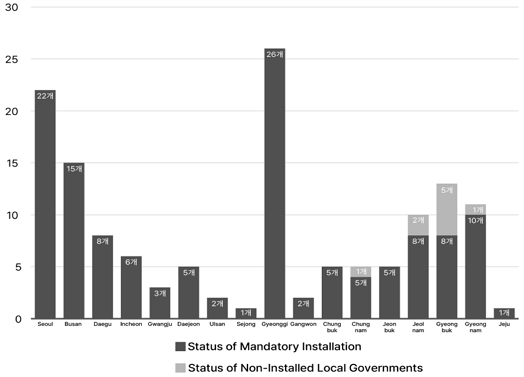
Status of mandatory installation targets for regional building safety centers nationwide
Status of mandatory installation targets for regional building safety centers nationwide
전국의 지역건축안전센터에 채용된 전문 인력은 전국 지자체에 총 208명이 배치되어 있으며 건축사는 112명, 건축구조기술사는 7명, 건축구조 고급기술인 이상은 57명, 건축시공기술사는 22명, 토질 및 기초기술사는 7명, 기타는 3명이 배치되어 있다. 지역별로 살펴보면 서울특별시(62명)와 경기도(43명)가 가장 많은 전문인력을 확보하고 있으며, 두 지역이 전체의 약 52%를 차지한다. 반면 비수도권은 채용률이 현저히 낮은 상황으로 그 중 전라남도는 의무 설치 지자체가 10개소이지만 전문인력 배치는 전라남도청에 배치된 건축사 1명으로 기초지자체에는 전문인력이 없는 상황이다(Table 6.).
Status of professional personnel allocation by local government
3.2. 의무설치 지자체 현황분석
다음은 지역건축안전센터 의무설치 지자체들의 업무 현황을 분석하였다. 지자체 홈페이지의 조직도의 담당자별 업무 안내를 확인하여 「건축법」과 「건축물관리법」상 주요 업무 8개에 대하여 수행여부 현황 파악을 진행하였다.
분석항목은 「건축법」에서 규정하고 있는 ①, ② 건축 인허가 관련 기술적 사항에 대한 검토(건축, 구조), ③ 공사현장 감리에 대한 관리 감독이 있으며, 「건축물관리법」에서 규정하고 있는 ④ 건축물 관리계획서 관리, ⑤ 건축물 정기점검 및 긴급점검 수행지원, ⑥ 소규모 노후 건축물 안전점검, ⑦ 건축물 해체허가 관련 업무, ⑧ 화재안전성능보강 지원 사업으로 총 8개의 항목으로 구성된다. 이외에도 지역건축안전센터에서 수행하고 있는 다양한 업무들이 있지만 대표적으로 법에 제시된 주요 업무들로 분석하였다.
그 결과 공사현장 공사감리에 대한 관리감독이 61.1%로 가장 높았고, 건축물 정기점검 및 긴급점검 수행지원과 건축물 관리계획서 관리가 53.4%로 뒤를 이었다. 반면 전문인력을 필요로 하는 업무인 건축 인허가관련 기술적 사항에 대한 검토(건축)는 35.9%, 건축 인허가 관련 기술적 사항에 대한 검토(구조)는 32.8%로 상대적은 낮게 나타났으며, 소규모 노후 건축물 안전점검은 42.0%, 건축물 해체 허가 관련 업무는 44.3%, 화재안전 성능보강 지원사업는 44.3%로 중간수준을 보였다(Fig 2.).
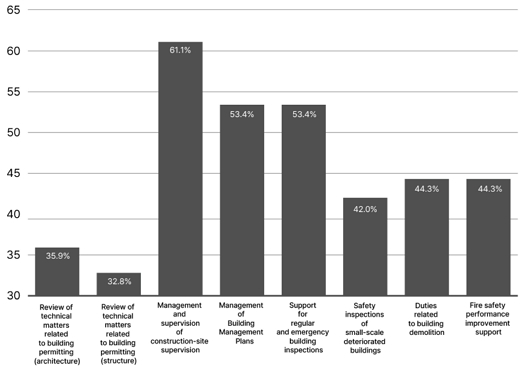
Status of task performance by regional building safety centers nationwide
3.3. 운영지표 도출
지역건축안전센터의 운영에 대해 종합적으로 분석한 결과, 센터 운영의 주요 구성 요소를 업무범위, 운영체계, 전문인력으로 구분하여 운영지표를 도출하였다. 먼저 ‘업무범위’는 법규에 제시된 업무와 지자체별로 추가적으로 수행되고 있는 실무 업무를 구분하여 구성하였다. ‘운영체계’는 법적 권한과 실제 운영상의 역할 간 불명확성, 지자체 규모와 허가권의 차이에 따른 운영 구분의 필요성 등 제도적 구조의 문제를 반영하였다. 마지막으로 ‘전문인력’은 건축사·기술사·고급기술인의 채용 용이성, 업무 수행의 적합성, 교육 및 역량 강화 필요성을 중심으로 설정하였다.
이러한 세 영역과 하위 지표들은 지역건축안전센터의 운영 현황을 체계적으로 진단하기 위한 기본 틀로서, 다음 장의 설문조사 분석을 위한 핵심 자료로 활용된다. 각 항목별 중요도를 실증적으로 분석하고 영향인자 분석을 위한 기반을 마련하였다(Table 7.).
Operational indicators for regional building safety centers
4. 운영지표 중요도 분석
4.1. 조사 대상자 일반적 특성
조사 대상자의 일반적 특성에 대한 빈도표는 다음과 같이 나타났다. 조사 대상자 전체 64명 중 직업 분포는 전문인력 89.1%, 공무원 10.9%로 나타났고, 소속기관 유형은 기초자치단체 73.4%, 광역자치단체(특별시, 광역시, 특별자치시, 특별자치도) 18.8%, 광역자치단체(도) 7.8% 순으로 나타났다. 건축 관련 업무 경력 대부분 비슷하게 나타났고, 다수가 지역건축안전센터의 설치 목적에 대해 알고 있다고 응답하였다(Table 8.).
General characteristics of survey respondents
4.2. 업무별 중요성 분석
현장에서 수행되는 업무와 전문가가 인식하는 업무 중요성 간에는 차이가 존재하고 있었다. 전문가들은 B. 건축 인·허가 관련 기술적 사항에 대한 검토(구조)를 가장 중요한 업무로 평가하였으나, 실제 수행률은 32.8% 수준에 그쳐 중요성이 높은 업무와 실행 간 괴리가 나타났다. 반면, 마. 정기점검 및 건축물 관리계획서 관리 등의 업무는 우선순위 보다 높은 수행률을 보이고 있다.
C. 공사현장 공사감리에 대한 관리 감독 업무는 중요성 우선순위에서도 높은 수준이었으며, 현재 전국 수행률도 61.1%로 가장 높은 수준을 보이고 있다(Table 9., Fig 3.).
Comparison of legal duty priorities and national performance levels of regional building safety centers
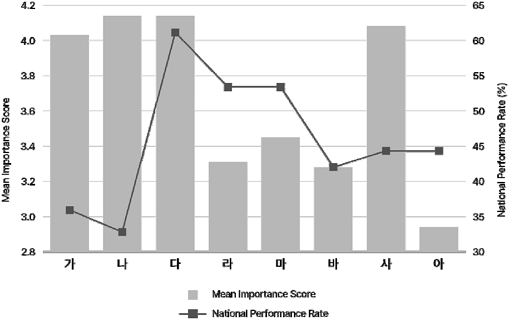
Comparison of legal duty priorities and national performance levels of regional building safety centers
4.3. 운영체계 관련 기술 통계분석
지역건축안전센터의 운영체계와 관련한 조사분석 결과, 응답자 대부분의 평균은 보통 이하로 나타났다. 이는 지역건축안전센터의 도입 이후 제도적 기반은 마련되었으나, ① 업무범위의 명확성, ② 법령과 실제 운영 차이, ③ 업무 관계의 중복성, ④ 지자체별 업무구분 필요성, ⑤ 인허가권이 없는 도청과 업무 구분 등의 중요도 결과로 판단하였을 때, 운영체계에 대한 검토가 필요한 것으로 나타났다(Table 10.).
Technical statistics related to the operational system(n=64)
4.4. 전문인력 관련 기술 통계분석
본 연구에서는 지역건축안전센터의 전문인력과 관련한 중요도를 조사 분석하였다. 응답자들은 전반적으로 전문인력 확보의 어려움과 역량 강화의 필요성에 높은 공감대를 보였으며, 이는 현행 배치 기준과 지원 제도가 충분하지 않음을 시사한다. 또한 향후 전문인력의 안정적 운영을 위해 채용 기반의 현실화와 체계적인 교육·역량 강화 프로그램 구축이 필요함을 확인하였다(Table 11.).
Technical statistics related to professional personnel(n=64)
운영 지표에서 업무 범위 중 법규 외 수행 중 업무인 ‘1, 2, 3종 시설물 관리’에 대해 일반적 특성에 따른 차이를 분석한 결과는 다음과 같다. ‘1, 2, 3종 시설물 관리’는 직업(p=.008), 소속 기관 유형(p=.033)에서 통계적으로 유의한 차이가 있는 것으로 나타났다. 직업은 공무원(M=3.71)이 전문인력(M=2.53)보다 ‘1, 2, 3종 시설물 관리’ 중요도가 높게 나타났고, scheffe의 사후검정 결과 기초자치단체(M=2.87)가 광역자치단체(도)(M=1.80)보다 높게 나타났다(Table 12.).
Management of type 1, 2, and 3 facilities by general characteristics
또한, 운영 지표에서 운영체계 항목 중 ‘허가권자의 인허가 검토와 지역건축안전센터 업무의 중복성’에 대해 일반적 특성에 따른 차이를 분석한 결과, ‘허가권자의 인허가 검토와 지역건축안전센터 업무의 중복성’은 소속 기관 유형(p=.017)에서 통계적으로 유의한 차이가 있는 것으로 나타났다. Dunnett’T3의 사후검정 결과 광역자치단체(도)(M=3.80)가 광역자치단체(M=2.58)보다 허가권자의 인허가 검토와 지역건축안전센터 업무의 중복성이 높게 나타났다(Table 13.).
Overlap between permitting authority reviews and regional building safety center duties by general characteristics
운영 지표에서 전문인력 항목 중 ‘전문인력(기술사) 채용의 용이성’에 대해 일반적 특성에 따른 차이를 분석한 결과, ‘전문인력(기술사) 채용의 용이성’은 직업(p=.004)에서 통계적으로 유의한 차이가 있는 것으로 나타났다. 공무원(M=4.00)이 전문인력(M=2.39)보다 ‘전문인력(기술사) 채용의 용이성’이 높게 나타났다(Table 14.).
Ease of hiring professional engineers by general characteristics
운영 지표에서 전문인력 항목 중 ‘전문인력(고급기술인) 채용의 용이성’에 대해 일반적 특성에 따른 차이를 분석한 결과는 ‘전문인력(고급기술인) 채용의 용이성’은 직업(p=.017)에서 통계적으로 유의한 차이가 있는 것으로 나타났다. 공무원(M=4.00)이 전문인력(M=2.91)보다 ‘전문인력(고급기술인) 채용의 용이성’이 높게 나타났다(Table 15.).
Ease of hiring senior technical personnel by general characteristics
법적 기준 상 업무와 일부 지자체의 추가적인 업무들의 전반적 중요도에 대한 Durbin-Watson 지수는 자기상관 없이 모두 독립이며, VIF 지수는 모두 10 미만으로 나타나 독립변수 간 다중공선성이 없는 것으로 나타나 본 자료는 회귀분석을 실시하기에 적절하였다. 법적 기준상 업무들의 전반적 중요도에 미치는 영향을 분석한 결과, ‘E. 건축물 정기점검 및 긴급점검 수행 지원’과 ‘A. 건축 인‧허가 관련 기술적 사항에 대한 검토(건축)’이 법적 기준 상 업무들의 전반적 중요도에 유의한 영향을 주는 것으로 나타났다(p<.001). ‘E. 건축물 정기점검 및 긴급점검 수행 지원’(B=.381)과 ‘A. 건축 인‧허가 관련 기술적 사항에 대한 검토(건축)’(B=.204)이 높을수록 법적 기준 상 업무들의 전반적 중요도가 높아지는 것으로 나타났고, 설명력은 30.1%로 나타났다. 중요도 우선순위는 E. 건축물 정기점검 및 긴급점검 수행 지원(β=0.476)과 A. 건축 인‧허가 관련 기술적 사항에 대한 검토(건축)(β=0.216)의 순으로 나타났다(Table 16.).
Effects on the overall importance of statutory duties
또한, 일부 지자체의 추가적인 업무의 전반적인 중요도에 미치는 영향을 분석한 결과, ‘F. 건축물 재난·재해 관련 업무’(p<.001), ‘C. 중단된 건축공사장 안전관리’(p=.017)가 일부 지자체의 추가적인 업무의 전반적인 중요도에 유의한 영향을 주는 것으로 나타났다 (Table 17.). ‘F. 건축물 재난·재해 관련 업무’(B=.544)와 ‘C. 중단된 건축공사장 안전관리’(B=.224)가 높을수록 일부 지자체의 추가적인 업무의 전반적인 중요도가 높아지는 것으로 나타났고, 설명력은 48.1%로 나타났다. 중요도 우선순위는 F. 건축물 재난·재해 관련 업무(β=0.621)와 C. 중단된 건축공사장 안전관리(β=0.229)의 순으로 나타났다.
Effects on the overall importance of additional duties in certain local governments
5. 결론
본 연구는 지역건축안전센터의 운영 실태를 실증적으로 분석하고 운영 효율성에 영향을 미치는 요인을 규명하기 위해 수행되었다. 이를 위해 제도의 취지와 법적 기반을 검토한 뒤, 전국 지자체 운영 현황을 정량적으로 조사하였으며, 이를 바탕으로 도출한 운영지표(업무범위, 운영체계, 전문인력)에 대해 관련 실무 경험을 가진 공무원 및 전문인력을 대상으로 설문조사를 실시하였다. 설문 결과를 통해 지표별 중요도와 전문가 인식을 분석하고, 업무 우선순위 및 중요도에 영향을 미치는 요인을 도출하였다. 이러한 분석은 지역건축안전센터의 운영 구조와 기능을 객관적으로 진단하는 기초자료로 활용될 수 있다.
본 연구에서는 이상과 같은 내용을 바탕으로 다음과 같은 지역건축안전센터 제도 운영의 기능 강화를 위한 운영지표에 따른 중요도 영향인자를 제시하고자 한다. 이상과 같은 연구 목적 및 내용에 따른 본 연구의 결과는 다음과 같다.
첫째, 업무범위 분석 결과, 「건축법」 및 「건축물관리법」에서 규정한 법정업무 중 ‘인·허가 기술검토(건축 및 구조)’, ‘공사감리 관리·감독’, ‘해체공사 검토’의 중요도가 높게 나타났다. 이는 지역건축안전센터가 행정 지원 기능을 넘어 기술적 검토와 현장 안전관리의 핵심 역할을 담당하고 있음을 보여준다.
둘째, 운영체계에 대한 분석에서는 법령과 실제 운영 간 차이가 존재하며, 업무 주체 간 역할이 중복되는 구조가 확인되었다. 지자체 규모별 건축허가 건수의 편차가 크고, 광역(도) 단위 센터의 경우 허가권이 부여되지 않아 기초지자체와 동일한 역할 수행이 어려운 것으로 나타났다. 이에 따라 지자체 행정수요와 조직규모를 고려한 차등형 운영체계의 필요성이 도출되었다.
셋째, 전문인력 부문에서는 채용의 어려움이 가장 큰 문제로 확인되었으며, 특히 기술사 및 고급기술인의 경우 인건비와 근무여건 문제로 인해 지속적 인력 확보가 쉽지 않은 것으로 나타났다. 반면, 전문인력의 역량과 센터 업무 수행의 적합성은 전반적으로 긍정적인 평가를 받았으며, 대부분의 응답자가 주기적인 직무교육의 필요성을 인식하고 있었다.
넷째, 집단 간 특성 분석에서는 직업(공무원·전문인력) 및 소속 기관 유형에 따른 인식 차이가 일부 항목에서 나타났으나, 대부분의 항목에서는 통계적으로 유의한 차이가 없어 관련 전문가들의 인식이 전반적으로 일치함을 보여주었다. 회귀분석 결과, 인·허가 기술검토 및 건축물 정기점검 관련 업무가 운영 효율성에 유의한 영향을 미치는 핵심 요인으로 도출되었다.
본 연구는 전국 지자체의 운영 현황과 전문가 인식 조사를 기반으로 운영 효율성 요인을 도출하였으나 몇 가지 한계를 가진다. 첫째, 조사 대상이 지역건축안전센터 업무 경험이 있는 공무원 및 전문인력으로 한정되어 있어 전체적인 행정 체계를 대표하기에는 한계가 있다. 둘째, 설문조사 방식 특성상 응답자의 주관적 판단이 개입될 수 있어 실제 행정 성과와 운영지표 간의 직접적인 비교에는 제한이 따른다.
이러한 한계를 고려하여 향후 연구에서는 다양한 이해관계자 집단을 포함한 확대된 표본 조사와 운영성과 자료의 연계 분석이 필요할 것이며, 이를 통해 지역건축안전센터 운영체계에 대하여 보다 객관적이고 종합적인 평가가 가능할 것으로 기대된다.
References
-
김민지, 이여경, 유제연, 지역건축안전센터의 실효성 제고를 위한 제도개선 연구, 건축공간연구원, 2023.
M.J. Kim, Y.G. Lee, J.Y. Yoo, A study on institutional improvements to enhance the effectiveness of regional building safety centers, Architecture & Urban Research Institute, 2023. -
김상희, 건축법 일부개정법률안 발의, 1915820, 2015.6.29.
S.H. Kim, Proposed by National Assembly Member Partial Amendment to the Building Act, Bill No. 1915820, June 29, 2015. -
부산광역시의회, 지역건축안전센터 설립 및 효율적 운영방안 연구보고서, 2020, p.18
Research Report on the Establishment and Efficient Operation of Regional Building Safety Centers, Busan Metropolitan Council, 2020, p.18. -
백정훈, 건축행정 검토를 위한 지역건축안전센터 도입 검토, 한국: 대한건축학회 추계학술발표대회논문집, 2016, pp.189-194.
J.H. Baek, Review of the Introduction of Regional Building Safety Centers for Building Administration Examination, Korea: Autumn Annual Conference of the Architectural Institute of Korea, 2016, pp.189-194. -
김예성, 지역건축안전센터의 운영 실태와 개선과제, 국회입법조사처, 2020, p.5
Y.S. Kim, Operational Status and Improvement Tasks of Regional Building Safety Centers, National Assembly Research Service, 2020, p.5. -
「건축법」, 법률 제14792호 (2017.4.18.일부개정) 제·개정 이유
Building Act, Act No. 14792 (Partial Amendment, April 18, 2017), Reasons for Amendment. -
백정훈, 지역건축안전센터 세부 시행규정 마련, 한국건설기술연구원, 2018, p.50
J.H. Baek, Preparation of Detailed Enforcement Regulations for Regional Building Safety Centers, Korea Institute of Civil Engineering and Building Technology, 2018, p.50. -
「건축법」, 법률 제18935호 (2022.6.10.일부개정) 제·개정 이유
Building Act, Act No. 18935 (Partial Amendment, June 10, 2022), Reasons for Amendment. -
「건축법 시행규칙」, 국토교통부령 제1494호 (2025.6.2.일부개정) 제·개정 이유
Enforcement Rules of the Building Act, MOLIT Ordinance No. 1494 (Partial Amendment, June 2, 2025), Reasons for Amendment.