Sustainable Intervention for Public University Campus Landscaping in the Inner-City Area of Ho Chi Minh City, Vietnam
ⓒ 2025. KIEAE all rights reserved.
Abstract
Improving the landscape condition on university campuses is an effective approach for enhancing the quality of student life. However, in Ho Chi Minh City, the landscape of university campuses in the urban area has been neglected. This study focuses on accessing the landscape physical condition of public universities in the city’s central districts to address the existing problems within campuses, as well as proposing sustainable interventions for resolving these issues.
Data from Public Universities in urban central area were analyzed to identify the main factors contributing to the decline in campus quality. Based on the characteristics of spatial arrangement, the campuses were categorized into types to conduct a more in-depth study of the landscape aspect. To access specific campuses, representative universities from each type were selected to deeply assess the environmental landscape conditions and spatial characteristics so that appropriate sustainable solutions could be developed for each campus.
The results indicated that the lack of green space and insufficient essential landscape elements were the prominent challenges that needed to be addressed. This approach provides a foundation for implementing similar measures at other universities facing similar challenges.
Keywords:
Ho Chi Minh City Public University, Campus Landscaping, Landscape Element, Sustainable Intervention, Green Design Strategy1. Introduction
1.1. Research Background
Mental health is an essential underlying factor that affects well-being, physical health, and work performance. According to the World Mental Health Report 2022 by WHO, global mental health has been on a downward trend, and this has been accelerated by the COVID-19 pandemic. Many other studies have also pointed out the imbalance in mental health among today’s students. Survey research from 2023 studies showed that 76% of students had mental health problems, with only 36% reporting positive mental health [1]. Outdoor spaces such as university campuses have long been recognized as not only an environment closely linked to university life but also a major influence on students’ physical and mental health. Landscape elements on campus can promote emotional resilience [2]. Increasing interaction with outdoor environments on campus has been shown to effectively reduce stress and improve academic performance [3]. Therefore, improving campus landscapes provides a sustainable and positive direction for improving students’ mental health.
In rapidly developing cities such as Ho Chi Minh City (Vietnam), the number of universities is increasing but the quality of the campus landscape has not received much attention. Especially in crowded inner-city areas, public university campuses are often neglected, leading to increasingly degraded physical environments. Campuses are facing significant challenges related to the lack of open space for a large number of students. In addition, the lack of necessary facilities and the monotony of the landscape also show that research on improving the physical environment on campuses for students is necessary and urgent.
1.2. Research Objectives and Purpose
The number of public university campuses is significantly higher than the number of private university campuses, reflecting the trend of university selection in Vietnam. This is mainly due to the prominence of public universities in terms of history, culture and tradition of public universities, leading to higher enrollment demand. However, unlike private university campuses with large investments, public universities often lag behind private universities in terms of campus landscape design and student amenities. The physical conditions and landscape design at public university facilities have many problems and do not focus on ensuring a safe learning environment for students. This study focuses on public university campuses located in the inner city of Ho Chi Minh City to clarify the current issues.
Previous studies on university campuses in Vietnam have primarily focused on renovation solutions for individual campuses, with limited attention given to analyzing physical spatial characteristics and developing strategies to enhance spatial quality across multiple campuses, particularly those of public universities, which have often been neglected. This gap has resulted in the daily spatial issues encountered by students remaining insufficiently identified and assessed. Therefore, this study aims to evaluate the physical spatial issues of university campuses in central urban areas through on-site surveys of 43 public university campuses, quantitatively analyzing spatial design factors, landscape physical elements on campus, and related data. Based on the findings, the study proposes feasible strategies to address these issues and improve campus spatial quality.
1.3. Methodology
Within the Ho Chi Minh City metropolitan area with 43 public university campuses, the study first investigated the conditions at these campuses. Data were collected using technical drawings, spatial analysis tools (e.g., Google Maps), and on-site field surveys. The data collection aimed to provide various metrics, including the area and perimeter of the entire campus as well as each indoor and outdoor space, building heights, density of built-up spaces and open area. In addition, the public campuses’ physical environment were accessed based on essential landscape factors and elements identified in the Literature Review section, with a focus on evaluating the quality and condition of open spaces. This access pointed out the physical spatial characteristics of the campuses as well as common problems at public university campuses.
The analysis of many surveyed campuses provided a foundation for broader generalizations, though further in-depth research on individual campuses is needed for more detailed insights. Campuses were grouped based on similarities in their spatial configurations and physical features, such as the distribution and area of indoor spaces, open spaces, and green spaces. This classification helped to identify prevalent spatial typologies and the problems within inner-city public campuses.
To conduct a more detailed assessment of specific landscape conditions, representative campuses from each type were selected according to criteria such as average total area, open space ratio, green space area, and green coverage ratio. These representative cases were compared and analyzed to to identify spatial deficiencies and landscape challenges specific to each site. The potential design interventions and alternative strategies drawn from the Literature Review were evaluated for their applicability to various spatial types. Ultimately, the studyaimed to show the improvements after the solutions were applied.
2. Literature Review
2.1. The Relationship Between Campus Landscape and University Students’ Campus Lives
Campus landscape plays an important role in influencing the daily quality of life of students, faculty and staff. Especially in the higher education system, which is the cradle for important specialized academic knowledge and where students lay the foundation for their careers, spaces on university campuses need to be given attention. These areas are considered the foundation for students’ experiences at university and form the way students perceive a working environment after graduating [4]. This is also the place where extra-curricular activities take place and create student cohesion throughout the semesters. Therefore, the university campus plays a vital role in the lives of its students.
In a context where students face study pressure, exam stress, and increasing psychological issues, spaces that can heal and reduce stress are necessary. Landscape of outdoor spaces have the potential of supporting relationships among students, improve the quality of university community, and enhance psychological behaviour and values of students, which are important aspect of social sustainability [5]. Green spaces have long been recognized for their positive impact on human mental health [6]. Especially this is even more evident after the COVID 19 pandemic that people have increasingly acknowledged the importance of interacting with green areas. Numerous studies have also proven that green spaces have a restorative role for students to lead a healthy lifestyle and that people with little exposure to green spaces are more likely to develop psychological diseases. One recent research also shows that loneliness and depression can be reduced in people who are regularly exposed to nature and live in a room with a view of green space.
2.2. The Factors Related to the Physical Condition of the University’s Landscape
The campus landscape plays a crucial role in shaping students’ morale, learning abilities, and overall well-being. Greenery has long been recognized for its positive impact on mental health, but other campus elements also influence students’ emotional states and contribute to a healthy university life. This section will analyze how various physical landscape elements related to universities’ campuses and strategies to improve their environment, specifically open spaces and buildings, affect students [7].
The spatial design layout of buildings is integral to optimizing space utilization on academic campuses [8]. The placement and arrangement of structures critically influence the design and functionality of open spaces and circulation routes, thereby impacting the overall campus environment. Open areas function as essential connectors for various student groups, and research on the Healthy Garden project underscores the importance of spatial design in these areas for enhancing students’ mental health and academic performance [9]. Furthermore, the interaction between open spaces and building layouts plays a significant role in students’ spiritual well-being. Factors such as courtyards, circulation pathways, and privacy considerations not only shape campus identity but also contribute to an enriched spiritual experience.
Courtyards, whether partially or fully enclosed by buildings, provide design flexibility that enhances campus microclimates by improving humidity control, temperature regulation, and mitigating the urban heat island effect, thus boosting overall quality of life [10]. Integrating environmental elements like trees and water features addresses ecological concerns effectively [11]. While the size of a courtyard may not directly influence perception, strategic greenery placement within these spaces positively impacts health outcomes. Effective circulation design, encompassing entrance placement, pathways, and their relationships to surrounding areas, reduces noise, alleviates traffic congestion, and enhances navigability, addressing both vertical and horizontal movement as well as vehicular access. This improves spatial organization and reduces stress for users. Additionally, maintaining a balance of privacy by delineating personal and communal spaces supports comfort, safety, and tranquility, fostering spiritual well-being and offering retreats from noise [12]. Incorporating these design elements into campus planning is crucial for fostering an environment conducive to academic and personal growth.
Landscape features within campus environments play a critical role in shaping interpersonal interactions and academic outcomes. Elements such as greenery, water features, site furniture, artwork, and sports facilities are integral to creating settings that foster psychological recovery and overall well-being [9]. Greenery, including green strips, lawns, and tree canopies, is linked to improved well-being, reduced stress, and increased vitality [13]. Water features enhance psychological resilience by fostering a restorative atmosphere [14]. The importance of site furniture, particularly seating, has been underscored by the COVID-19 pandemic, highlighting its role in functional campus design [15]. Artwork adds aesthetic value and supports a therapeutic environment, while sports facilities are essential for student engagement, with active participation correlating with higher levels of commitment and enthusiasm [16]. These elements need to be integrated across open spaces, indoor areas, and building exteriors to serve diverse functions effectively.
In campus open areas, greenery, including trees, flower beds, and ground cover, provides shade and visual appeal, while water features like lakes, fountains, and swimming pools enhance environmental comfort. Site furniture such as seating, trash receptacles, lighting, and kiosks adds convenience, and artwork reflects local history and culture, fostering community engagement [17]. Sports facilities such as soccer fields, basketball courts, tennis courts and so on, offer recreational opportunities [18]. For building exteriors, incorporating greenery through self-climbing plants or vertical gardens with irrigation systems helps purify air and mitigate urban heat islands, though water features are less common but found in notable buildings like the Milan Apple Store and Sayamaike Museum [19]. Indoors, the integration of greenery, water features, site furniture, and artwork contributes to a positive environment. Indoor trees regulate temperature and humidity, purify air, and improve learning efficiency [20]. Miniature indoor landscapes created by grouped plants offer emotional benefits beyond traditional décor [21]. Smaller water features, such as fountains or water walls, and customized site furniture and artwork address specific student needs and enhance spatial functionality.
Green spaces play a vital role in human life and serve as a sustainable solution for cities facing the impacts of climate change, such as Ho Chi Minh City [22]. In a tropical monsoon climate near the equator, with hot and humid conditions year-round (25~27℃), numerous studies recommend the use of tree shade for outdoor spaces as an essential measure [23]. Gardens surrounding buildings or green facades can reduce indoor temperatures by 2~4℃, significantly improving the indoor microclimate [24]. In addition, indoor greenery has been shown to cool the air and provide multiple environmental benefits [25]. Therefore, implementing strategies to enhance green coverage across all campus spaces represents a sustainable approach well-suited to this climatic context.
Integrating nature into urban and architectural spaces has become a major focus for architects, with green building trends accelerating since the early 21st century. Incorporating greenery into campus spaces—whether on rooftops, façades, balconies, walkways, pavements, or indoor areas—has been shown to improve relaxation, well-being, and environmental performance [26]. For building exteriors, common strategies include green roofs, green façades, and green balconies. These provide visual comfort, regulate temperature, and mitigate the urban heat island effect. Examples include the rooftop gardens at Nanyang Technological University (Singapore) and Thammasat University (Thailand), the green façades at WOHA School of Art (Singapore), and green balconies at Kasetsart University (Thailand) and several universities in Vietnam. In open spaces, green walkways and green pavements integrate vegetation into circulation areas, offering shade, rainwater management, and improved environmental quality—such as permeable grass-tile pavements in parking lots. For both indoor and outdoor areas, suspended gardens, green walls, and living furniture create biophilic environments, as seen in the indoor atrium garden at the University of Montana and the green-covered atrium at Dresden University of Technology.
2.3. Public Universities in the Inner-City Area of Ho Chi Minh City
Universities began to establish themselves in the 1950s, following the relocation from the capital to avoid conflict. Initially, university campuses were situated in the city area near French administrative buildings. After 1975, the number of universities increased, and as of now, this city hosts 39 public universities across 74 campuses. From 2006 onwards, the Vietnamese government decided to move universities from the central city area to suburban locations to alleviate pressure on traffic and infrastructure [27]. Despite this, university campuses in the inner city continue to operate and serve thousands of students daily. However, there has been a shift in focus towards developing suburban university campuses, with less emphasis on maintaining and upgrading inner-city campuses. Consequently, these inner-city campuses are relatively small and less equipped, yet they remain vital educational environments.
Out of a total area of 2095km2, 142.15km2 is concentrated in the city center. Within this area are 43 public university campuses and 10 private universities across 13 districts, while the suburbs host 28 public universities and 5 private institutions [28]. The broader land availability in the suburbs enables the development of universities with more extensive amenities compared to the limited space in the inner city. In 2016, the government facilitated the relocation of public universities to suburban areas, leading to the formation of a university town that underscores a strategic shift towards enhancing suburban educational facilities. Since 2022, the municipal People’s Committee has endorsed renovations and upgrades to central university campuses, signaling a renewed focus on improving urban academic infrastrure.
There are differences in open space characteristics between public and private university campuses. Private institutions typically lack open spaces and are often individual buildings, though exceptions like Van Lang University (Binh Thanh district) feature amenities such as a sports field, swimming pool, plaza, and lawn to enhance student life. In contrast, public universities primarily offer sports fields, with only 8 out of 43 campuses including these facilities (Fig. 1.). Public universities in Vietnam have a greater number of campuses compared to private ones, with 71 campuses in Ho Chi Minh City—43 in the inner city—versus 15 private campuses. This means a significant portion of the city’s student population engages with public university campuses daily. In 2021, there were 2,145,426 university students, with 1,728,856 (80.58%) enrolled in public universities, a trend that has persisted in recent years [29]. The lack of open spaces at these institutions affects their image and impacts students’ learning efficiency and mental health. Frequently, potential green areas are converted into parking lots, worsening inner-city traffic congestion. Experts attribute this issue to poor management and insufficient investment in green spaces. Architect Du Ton Hoang Long cites both limited funding and managerial attitudes as contributing factors, while Nguyen Do Dung highlights constraints such as limited land, minimal green space, and fragmented architectural designs at urban universities [30].
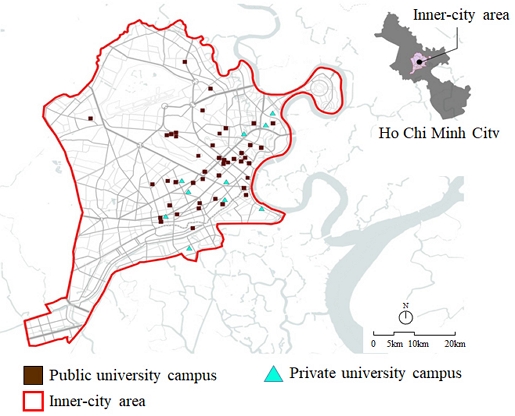
Public and private university campuses in the inner-city area of Ho Chi Minh City
Regulations in Vietnam on universities have not really focused on open space design standards on campus. In recent years, standards related to university facilities do not mention landscape factors but only mention regulations on construction areas of new campuses (according to Circular 01/2024/TT-BGDĐT). The most frequently mentioned document is “Vietnam Standard TCVN 3981:1985 on universities - design standards” issued in 1985, applicable to both new construction and campus renovation nationwide. This document mainly states regulations on interior space design of buildings, giving priority to application to new campus designs. Of which, there are only 3 regulations related to open space landscape design mentioned in the section “Requirements on construction land and overall layout” including: In the university construction land, it is necessary to plan outdoor parking lots for cars, motorbikes, bicycles, and other transport (subsection 2.13); Requiring university construction areas to be surrounded by trees or approved materials (subsection 2.14); and The area of flower gardens and trees accounts for about 40% of the total area of the campus (sub-section 2.15). The standards for landscape design or regulations on open space facilities are not specifically mentioned. And the figure on the percentage of trees required in the university campus (40%) in this TCVN 3981:1985 document can be used for comparison when considering green space. In Ho Chi Minh City, which covers over 2,000km2 and has a population exceeding 8 million, the average green space per capita is only about 2.1m2 (according to the 2023 General Planning Adjustment Document). This situation indicates that the shortage of green space is a common issue across the entire city. It also places greater demands on the provision of greenery within university campuses, making it a significant challenge for educational institutions to meet green space standards. In this context, the 40% green space ratio stipulated in TCVN 3981:1985 can serve as a reference when assessing greenery within campus areas. University campuses in the inner-city area have been authorized by local authorities to undergo renovations and upgrades in terms of facilities and greenery, raising expectations for contributing to a renewed image of the city.
3. Physical Landscape Conditions of Public University Campuses
The study assessed 43 public university campuses in inner-city Ho Chi Minh City, analyzing campus size, density, open space, and green area. Campus areas range from 100.13m2 at Viet Duc University to 138,208.87m2 at Ho Chi Minh City University of Science and Technology—district 10, with an average of 11,259.17m2. Building coverage density averages 54.06%, varying from 19.29% at Ho Chi Minh City University of Education—district 1 to 93.07% at Ho Chi Minh City University of Education—district 3. Average building height is about 7 floors, with the tallest at 22 floors at Ho Chi Minh City Open University—district 1. Open space ranges from 15.2m2 at Ho Chi Minh City University of Education—District 3 to 84,791.15m2 at Ho Chi Minh City University of Science and Technology—district 10, averaging 6,447.11m2. Green space varies from 6.3m2 at Ho Chi Minh City Open University—district 1 to 22,596.03m2 at Ho Chi Minh City University of Science and Technology—district 10, with an average of 1,349.15m2. The large gap between the standard green area ratio and the actual green area ratio is shown in Fig. 2. The average greenery density is 6.51%, with green coverage in open spaces at 12.82%, and only 13 campuses exceed 10% green space, falling short of the recommended 40% standard. Table 1. shows the average data of campus space, built space, open space and green space. The average ratio of open space and average green space does not differ much, but when compared to the ratio of green area, there is a remarkable difference. The significant shortfall in green spaces highlights the need for improvements to enhance environmental integration, learning experiences, and student well-being.
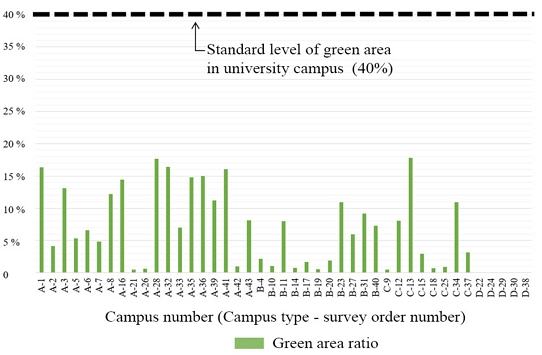
Green areas ratio on 43 Public university campuses in the inner-city area of Ho Chi Minh City

Spatial data among 43 public university campuses
The differences in area among the three spatial components of a campus are illustrated in Fig. 3.: building area, open space (excluding green areas), and green area. The gap between building area and open space varies across institutions. The most significant disparity is observed at Ho Chi Minh City University of Education (D-29), where the building area measures 204.1m2 (accounting for 93.07% of the total site area), approximately 13 times larger than its open space. A total of 24 universities (55% of all campuses) have building areas exceeding both open space and green space. This indicates that the difference in area between campuses with large building footprints and those with extensive open space (excluding greenery) is relatively small. Across all campuses, the proportion of green space remains very low. Notably, the five universities highlighted within the red rectangle in Fig. 3. have no green space; their open space consists only of setback areas required by building regulations, most of which are used for parking area. These institutions also differ from other campuses in that their entire space is contained within a single building.
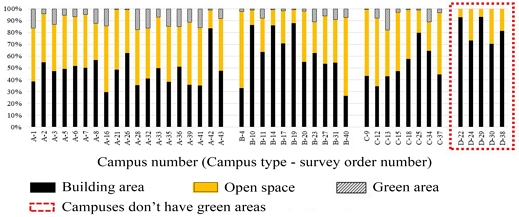
Ratio of the area of the spaces on 43 Public university campuses
Survey of physical spaces in campuses for landscape elements, 38 campuses equipped with site furniture such as seating and trash bins. Although the green tree ratio is less than 7%, a survey of the physical space in all campuses shows the presence of trees or flower beds, except for 5 campuses that do not have open space. Additionally, 8 campuses have artworks like sculptures, and only 1 campus, the University of Medicine and Pharmacy in Ho Chi Minh City, includes water features like a pond and fountain. 7 campuses provide sports facilities, including soccer fields, basketball courts, and tennis courts. However, no campus includes all proposed landscape elements simultaneously, except for the University of Medicine and Pharmacy in Ho Chi Minh City (district 5 campus). These landscape features are critical for evaluating the development of open spaces and the comfort of student living conditions. Yet, essential aspects for an optimal campus environment are frequently overlooked. Enhancing physical conditions requires not only expanding green spaces but also integrating other significant landscape elements to promote a healthy campus atmosphere.
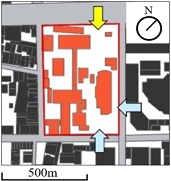
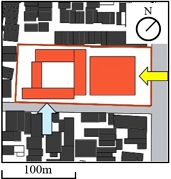
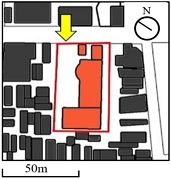
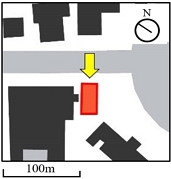
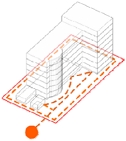
Despite the diversity among public university campuses, common features in building and open space layouts are apparent. Campuses fall into four main types: Type A (dispersed landscape type), Type B (central courtyard type), Type C (adjacent landscape type), and Type D (single-building type). Fig. 4. shows the distribution of these types: 19 campuses of Type A, 11 of Type B, 8 of Type C, and 5 of Type D.
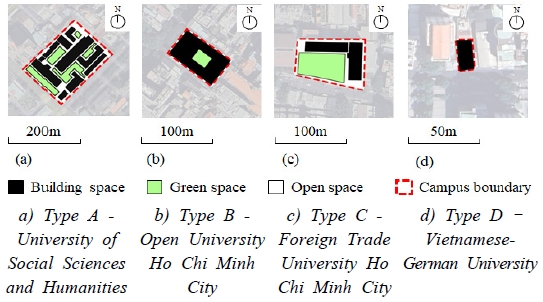
Sampling university campus landscaping distribution
4. Types of Public University Campuses and Representative Case
4.1. Characteristics of Four Types of Public University Campuses and Representative University Campuses
Public universities are categorized into four types based on the layout of open spaces and buildings. Each type has unique characteristics that can be identified and from which the strengths and weaknesses of these spatial layouts can be found. This study focuses on 43 public university campuses with varying sizes, differing ratios of open to indoor spaces, varying densities, and building heights; therefore, identifying unique characteristics for grouping is essential. Understanding these characteristics helps to determine the direction of strategies for improving the physical landscape environment of these public universities. In Fig. 4., the forms of each university campus type are illustrated through open space area, green area and building area in the university campus belonging to four types.
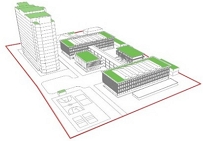
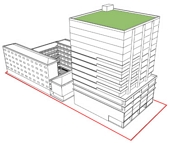
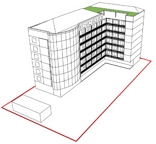
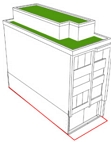
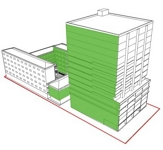
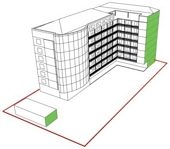
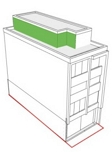
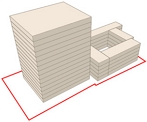
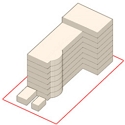
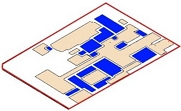
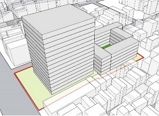
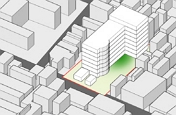
Type A (dispersed landscape type) feature a complex arrangement of multiple function-specific buildings—such as classrooms, halls, and offices—logically placed to optimize functionality and circulation. These campuses are characterized by numerous small open spaces interspersed between buildings, which serve as connectors and aesthetic enhancements, fostering student interaction and offering a diverse, flexible landscape. However, this intricate layout can complicate navigation and fragment social interactions, while also presenting challenges in managing traffic and parking without disrupting pedestrian areas. Type B (central courtyard type) are organized around a central open space that functions as the primary communal area for the entire university community, promoting interaction among students, faculty, and staff. Despite this central focus, the limited size of the open space can lead to a monotonous environment and difficulties in accommodating additional green areas and amenities. Type C (adjacent landscape type) feature open spaces predominantly located in front of the buildings, acting as buffers between traffic and the campus environment. While these spaces provide accessibility and reduce noise, the singular open area limits landscape design flexibility and the capacity to meet varied needs for greenery and amenities. Type D (single-building type), characterized by a single building with no green spaces, confine all activities to interior spaces, with communal areas primarily in the lobby. The outdoor space of this type is a 1 to 2 meter setback on the first floor. Improvements in such settings must therefore concentrate on enhancing interior environments and considering exterior modifications where feasible.
The difference in building area and open space area in each campus and the campuses are classified into four types based on the spatial characteristics mentioned above is illustrated in Fig. 5. After analyzing the data from 43 university campuses, Type A, characterized by larger open spaces relative to building areas, is the most prevalent, comprising 19 campuses (44.18%). Type B follows with 11 campuses (25.58%), Type C includes 8 campuses (18.6%), and Type D has the fewest with 5 campuses (11.63%). In terms of average area, the ranking from largest to smallest is Type A, Type B, Type C, and Type D. The average area of Type A (21,042.97m2) is approximately three times that of Type B (6,289.55m2), while the average for Type B is also about three times larger than that of Type C (1,710.68m2). In turn, the average area of Type C is nearly six times that of Type D (291.45m2). In Fig. 5., the 5 universities of Type D (single building) are so different in area from other campuses that it is almost impossible to see on the chart. The substantial differences between the types highlight the need to consider the physical space of each type separately and to develop appropriate strategies.
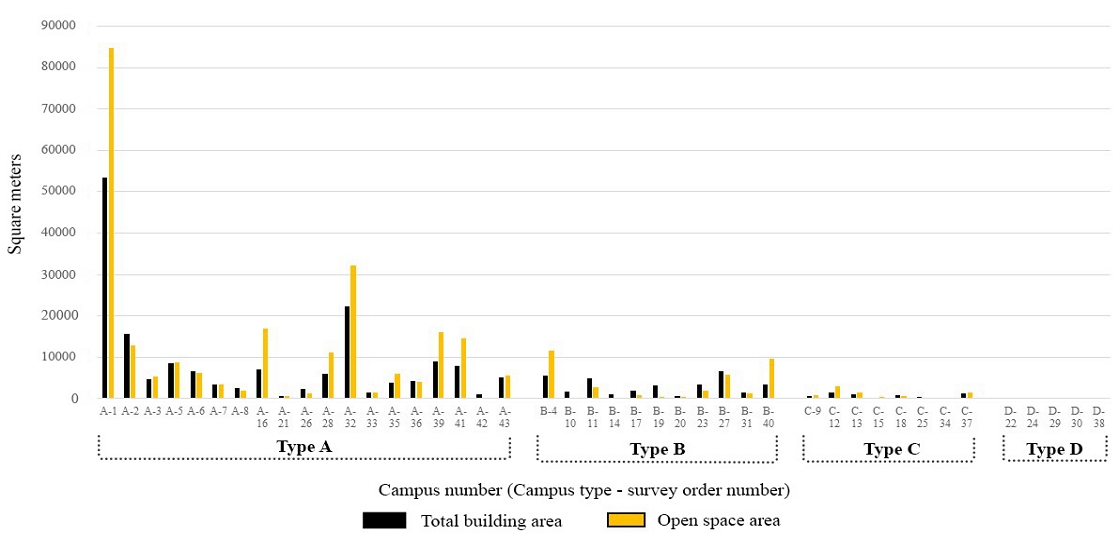
Total building area and open space area of 43 public university campuses in the inner-city area of Ho Chi Minh City
Categorizing the university types by space and analyzing the data reveals the main open areas in each type. These common spaces interact with the buildings according to the spatial layout characteristics of each category. For Type A, which feature large open areas, the open spaces located between buildings offer numerous opportunities for implementing alternative methods. Types B and C campuses also include central open spaces that serve as the primary outdoor areas for these institutions. In contrast, Type D campuses don’t have open spaces, necessitating improvements to the landscaping in other areas. To effectively incorporate greenery into their campuses, universities need a strategy that utilizes both indoor spaces and the building exteriors.
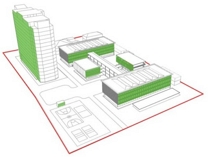
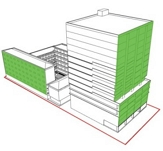
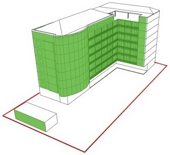
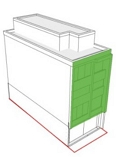
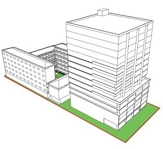
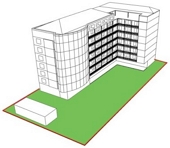
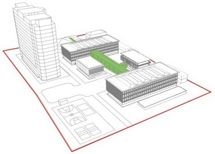
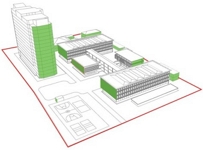
To determine the improvement strategy for each type’s campus, it is essential to find representative universities for each type. They can provide the most objective view of the layout characteristics within the campus, as well as the scale, and green space ratio of each type. This helps make analyses of spatial design and landscape physical elements more specific. They are four universities with data nearest to the average index of total area, green area, open space (Table 2.). Four universities exemplify distinct campus typologies: The University of Medicine and Pharmacy Ho Chi Minh City (district 5) represents Type A; the University of Economics Ho Chi Minh City (district 10) represents Type B; Ton Duc Thang University exemplifies Type C; and the University of Economics Ho Chi Minh City (district 3) is categorized as Type D. The University of Medicine and Pharmacy, a Type A campus, covers 25,206.94m2, including 2,822.72m2 of green space (11.2% of the total area) and 16,174.57m2 of open space, with 15 interconnected buildings linked by covered walkways. The University of Economics Ho Chi Minh City (district 10), a Type B campus, spans 5,336.18m2, featuring 584.92m2 of green space (10.96%) and 1,990.56m2 of open space. Ton Duc Thang University, classified as Type C, occupies 2,683.88m2 with 83.93m2 of green space (3.13%) and 1,491.69m2 of open space. Lastly, the University of Economics Ho Chi Minh City (district 3), representing Type D, covers 215.91m2 and consists of a seven-story building with no open spaces.
Four types of campus landscaping condition
4.2. Spatial Design and Landscaping Factors of Four Representative Universities
Landscape physical elements in university campus open spaces are vital for student comfort, mental well-being, and academic performance. Five landscape elements related to mental health that were mentioned in the Literature Review section include: greenery, site furniture, water features, artwork, and sports facilities.
Among the four representative universities, the University of Pharmacy and Medicine Ho Chi Minh City (Type A) incorporates all these elements. This campus is unique among the 43 public university campuses for meeting all the landscape criteria. In contrast, the University of Economics Ho Chi Minh City (Type B) and Ton Duc Thang University (Type C) include only some of these elements. Type B campuses have trees and low bushes, while Type C features seatings in common yard for student gatherings. The Type A campus’s diverse open spaces and comprehensive inclusion of landscape elements surpass those of Type B and C, highlighting its more effective integration of physical landscape elements.
The lack of comprehensive landscape elements in Type B and C representative university campuses suggests that these aspects are secondary and potentially neglected in campus design. For campuses with outdoor open spaces, these elements are crucial. Type A representative campus meets all criteria, whereas Type B and C generally only include basic elements such as seating and trees, as seen in the survey of the 43 campuses. Based on these elements, campuses can compare their physical environment to add appropriate facilities. A campus with a variety of landscape elements will help improve student life.
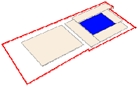
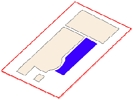
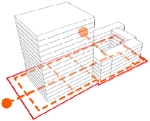
The spatial design factors of the campuses of the four representative universities focus on delineating the spatial layers present within the campuses, including clarifying the relationship between open spaces and the building blocks (Table 3.).
Spatial design factors of four representative campuses
The spatial design factors of the campuses of the four representative universities focus on delineating the spatial layers present within the campuses, including clarifying the relationship between open spaces and the building blocks (Table 3.). The University of Medicine and Pharmacy Ho Chi Minh City (district 5 campus) has a spatial layout that includes a combination of parallel and perpendicular arrangements of 15 buildings, creating fourteen quiet, private courtyards. Covered walkways provide shade and divide open spaces. This is also a special feature of this type of space consisting of many separate buildings. On this campus, the most circulation and gathering places are the courtyards. Having many buildings is a foundation for being able to exploit the building’s exterior. Therefore, a representative university campus of Type A has the potential to develop courtyard spaces and the exterior of the building such as facade.
In the case of the University of Economics Ho Chi Minh City (district 10 campus) (Type B), the central courtyard is an important space that ensures both privacy and high circulation, creating a key point of contact for students. This area, together with the buildings facing the courtyard, has great potential for applying improvement methods. In addition, the campus has six buildings, including a 20-story building, creating further opportunities for applying solutions to the external surface of the building.
Ton Duc Thang University (Type C) has a semi-public central courtyard, which, although not ensuring high privacy, still maintains good circulation. Like the campus representing Type B, this is a space with high circulation and serves all students at this campus. Although there is only one building, the wide facade and many balconies facilitate the application of solutions to enhance vertical green areas.
Finally, the University of Economics Ho Chi Minh City (district 3 campus), a Type D building, is a vertical structure, so the indoor landscape space becomes the main highlight. Therefore, developing interior green spaces is very important. In addition, increasing the green space on the exterior surface of the building is also an effective way to integrate nature into architecture.
5. Strategies for Increasing Green Area at the Representative Universities
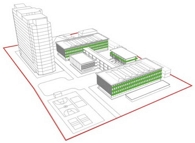
Potential solutions, including green roofs, façades, walls, balconies, pavements, walkways, suspended plants, and living furniture, are detailed in Table 3., showing their potential to enhance both outdoor and indoor environments across four representative campuses. The spaces applicable to the strategies are specified in Table 4. for more detailed.
Expected results for four representative campuses using alternative green design strategies
The feasibility of three alternative methods—green roofs, green facades, and green balconies—was assessed for improving green areas on building exteriors. Green roofs can reduce rooftop temperatures, collect rainwater, and improve visual quality while enhancing student interaction with greenery. This solution requires adequate load capacity, making them suitable mainly for reinforced concrete flat roofs. In Type A representative campus, 10 rooftops could add 6,584.38m2 (26.12%). Type B could gain 1,809.79m2 (33.93%) with one rooftop, Type C 2,937.62m2 (11.6%) with one rooftop, and Type D 164.24m2 (76.53%) with two rooftops. After implementation, green space ratios would be 37.32%, 44.89%, 14.73%, and 76.53% respectively, with Types B and D meeting the 40% greenery standard.
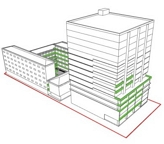
Green façades suit campuses with large frontage areas or limited land, such as Type D, and can reduce surface temperatures while enhancing building aesthetics and student–nature interaction. Challenges include reduced daylight, irrigation moisture affecting structures, and regular maintenance needs. The potential increases in green space are as follows: Type A can gain 48.25% (12,161.84m2) with 15 façades; Type B can achieve 63.94% (3,411.70m2) with 2 façades; Type C can reach 65.72% (1,763.93m2) with 2 façades; and Type D can gain 51.87% (112m2) with 1 façade. After implementation, the total green space ratios for each campus are 59.45% for Type A, 74.9% for Type B, 68.85% for Type C, and 51.87% for Type D. In all cases, maximizing the use of external building surfaces results in green space ratios exceeding Vietnam’s national standards.
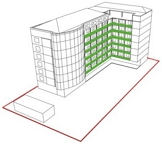
Green balconies, using balcony areas to cultivate plants from small pots to climbing species, can reduce air pollution, balance the indoor microclimate, and offer students direct interaction with greenery near classrooms, offices, and corridors. However, attention must be given to maintaining adequate natural daylight when installing plants on school balconies. For the four representative campuses, Type A has 7 applicable balconies, Type B has 4, and Type C has 2, while Type D has none. Implementation would add 10,799.72m2 (42.84%) for Type A, 1,046.52m2 (19.61%) for Type B, and 262.73m2 (12.92%) for Type C, raising total green space ratios to 54.04%, 30.57%, and 16.05% respectively.
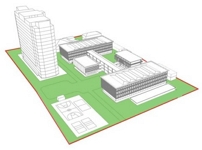
To enhence green coverage in open spaces on public university campuses, two methods were evaluated: green pavement and green walkways. Green pavements, using grass bricks or permeable materials, improve rainwater infiltration, lower surface temperatures, enhance pedestrian experience, and raise environmental awareness. They require regular maintenance to prevent weed overgrowth and address drainage or soil issues. Implementation could add 18,997.29m2 (75.37%) for Type A, 2,575.48m2 (48.26%) for Type B, and 1,575.62m2 (58.77%) for Type C, while Type D has no suitable open areas. After implementation, green space ratios would be 86.57%, 59.22%, and 61.9% for Types A, B, and C respectively, all meeting the national standard.
Green walkways integrate vegetation into covered corridors or canopies, providing shade, improving microclimate, and encouraging walking while creating nature-friendly common spaces. Like green roofs, they require appropriate plant selection to ensure load capacity and effective irrigation. Among the four campuses, only Type A has suitable connecting walkways, enabling an increase of 7,738.19m2 (30.94%) in green space, raising the total ratio to 42.15% and meeting the Standard.
Alternative methods for both indoor and outdoor spaces include the installation of green walls, suspended plants, and living furniture. Green walkways incorporate vegetation into covered corridors or canopies, providing shade, improving microclimate, and encouraging walking while creating nature-friendly communal spaces. Like green roofs, they require suitable plant selection to ensure load capacity and proper irrigation. Among the four campuses, only Type A has appropriate connecting walkways, enabling an increase of 7,738.19m2 (30.94%) in green space, raising the total ratio to 42.15% and meeting the national standard. Flexible solutions, including indoor green walls, suspended plants, and living furniture, can be applied cost-effectively and with adaptability, though they are constrained by the existing interior layout, which may limit installation and coverage.
These strategies facilitate the creation of miniature landscapes in confined spaces like hallways and elevators, proving especially valuable for universities with limited open space, such as the University of Economics Ho Chi Minh City District 3 (Type D). Green wall and green pavement are the most effective methods for enhancing green spaces in campuses of Type A, Type B, and Type C universities. For the University of Economics Ho Chi Minh City district 3 campus (Type D), methods such as green roofs, green façades, and methods applied to indoor areas will address the issue of insufficient open space for this type of university. Additionally, there are various ways to increase green space within each area of the campus, regardless of whether there is pen space or not.
6. Conclusion
University campuses play an important role in the academic life and mental health of students. However, the campuses of public universities in the inner-city area of Ho Chi Minh City are gradually being neglected and the physical conditions related to the campus landscape are not really adequate to create an effective school environment for students. This study is based on the landscape physical conditions of public university campuses to find the missing factors that lead to this situation and appropriate strategies to help resolve those shortcomings.
This study reveals a severe deficiency of green space across 43 university campuses, as evidenced by data on campus and open area green space. The existing green space falls significantly short of the Vietnamese standard, which mandates at least 40% of the total campus area be dedicated to greenery. Furthermore, the current landscape elements are inadequate and do not adequately address students’ needs. To address this, solutions are required to enhance green space and facilities public university campuses. Given the diversity in campus sizes and characteristics, four distinct campus type were identified based on spatial layout features. From these, four representative universities were selected to develop strategies for improving physical landscape conditions. The analysis indicates that these campuses do not yet meet the necessary physical landscape and spatial design criteria.
The study explores alternative methods to augment green space by applying these strategies to various campus areas, including building exteriors, open spaces, and indoor environments. This approach allows for the development of targeted strategies that can enhance green areas regardless of campus layout or the availability of open spaces. Incorporating suitable spatial methods and landscape elements is crucial for improving campus environments, thereby enhancing students’ quality of life, reducing academic stress, and improving overall facility standards.
The findings of this study provide data and references for reassessing spaces to serve the renovation old campuses or construction of new campuses in Vietnam. The proposed solutions to improve the quality of space are not only in line with Vietnamese standards but also adapted to different types of facilities contributing to the planning process of school facilities. However, the study has certain limitations regarding the proposed strategies. First, the analyses primarily focus on potential physical spaces suitable for applying these solutions, without detailing the economic aspects of each strategy, including implementation costs, maintenance expenses, and short- or long-term deployment plans for each campus. In addition, the methodology was limited in data collection, resulting in the absence of comprehensive surveys addressing the needs of students within the campuses. These are also aspects that future research should consider when evaluating university campuses to provide more comprehensive analyses from economic, technical, and social perspectives, and to refine the methodology for practical application.This approach aims to contribute to future research that will help improve the environmental quality of campuses facing similar problems not only in Ho Chi Minh City but also in other cities.
References
- J. Bryant, L. Welding, College Student Mental Health Statistics, http://www.bestcolleges.com/research/college-student-mental-health-statistics, , 2024.
-
J. Zhang, Y. Li, The impact of campus outdoor space features on students’ emotions based on the emotion map, International Journal of Environmental Research and Public Health, 20(5), 2023, 4277.
[https://doi.org/10.3390/ijerph20054277]

-
N. Sun, W. Liu, Z. Zheng, Campus outdoor environment, learning engagement, and the mental health of college students during the COVID-19 pandemic: From the perspective of students in different grades, Frontiers in Public Health, 11, 2023.
[https://doi.org/10.3389/fpubh.2023.1143635]
-
P. Temple, From space to place: University performance and its built environment, Higher Education Policy, 22(2), 2009, pp.209-223.
[https://doi.org/10.1057/hep.2008.30]
-
H. Chen, J.H. Ye, The influence of outdoor activities and campus landscape on university students’ subjective well-being during the COVID-19 pandemic, Sustainability, 15(5), 2023, 4157.
[https://doi.org/10.3390/su15054157]
-
J. Barton, M. Rogerson, The importance of greenspace for mental health, BJPsych, International, 14(4), 2017, pp.79-81.
[https://doi.org/10.1192/S2056474000002051]
-
T.P. Pasanen et al., Urban green space and mental health among people living alone: The mediating roles of relational and collective restoration in an 18-country sample, Environmental Research, 232, 2023, 116324.
[https://doi.org/10.1016/j.envres.2023.116324]
-
S. Bendjedidi, Y. Bada, R. Mexiani, Open spaces: Spatial configuration, visibility analysis and use, International Review for Spatial Planning and Sustainable Development, 6(4), 2018, pp.93-109.
[https://doi.org/10.14246/irspsd.6.4_93]
-
S.S.Y. Lau, Z. Gou, Y. Liu, Healthy campus by open space design: Approaches and guidelines, Frontiers of Architectural Research, 3(4), 2014, pp.452-467.
[https://doi.org/10.1016/j.foar.2014.06.006]
- M.N. Mohd Fadzi, S. Sheikh Ahmad, M.F. Shaari, Courtyard configuration strategy to reduce air temperature in Malaysian university campus, e-Academia Journal, 8, 2018, pp.57-63.
-
J. Han et al., Research on the influence of courtyard space layout on building microclimate and its optimal design, Energy and Buildings, 289, 2023, 113035.
[https://doi.org/10.1016/j.enbuild.2023.113035]
- C. Kim, K. Cho, Design for privacy in public space, Proceedings of the 21st International Conference on Engineering Design (ICED17), 5, 2017, pp.21-25.
- E.M. Costa, T. Kállay, Impacts of green spaces on physical and mental health, the URBACT Health&Greenspace Network, 2020.
-
S. Völker, T. Kistemann, The impact of blue space on human health and well-being - Salutogenetic health effects of inland surface waters: A review, International Journal of Hygiene and Environmental Health, 214(6), 2011, pp.449-460.
[https://doi.org/10.1016/j.ijheh.2011.05.001]
-
S. Alnusairat et al., Rethinking outdoor courtyard spaces on university campuses to enhance health and wellbeing: The anti-virus built environment, Sustainability, 14(9), 2022, 5602.
[https://doi.org/10.3390/su14095602]
-
M. Holienka, J. Holienková, M. Holienka, Sports as a stepping-stone for entrepreneurship: Examining sports university students, Acta Universitatis Agriculturae et Silviculturae Mendelianae Brunensis, 66(6), 2018, pp.1485-1496.
[https://doi.org/10.11118/actaun201866061485]
- S. Jangid, The significant role of art in shaping our society, Chitkara University, www.chitkara.edu.in/blogs/the-significant-role-of-art-in-shaping-our-society, , 2022.10.
- M. Salman, The importance of sport of university students during campus life, Energy Education Science and Technology Part B: Social and Educational Studies, 4, 2012, pp.495-500.
-
Y. Wang, H. Akbari, The effects of street tree planting on Urban Heat Island mitigation in Montreal, Sustainable Cities and Society, 27, 2016, pp.122-128.
[https://doi.org/10.1016/j.scs.2016.04.013]
-
F. Liu et al., A review on indoor green plants employed to improve indoor environment, Journal of Building Engineering, 53, 2022, 104542.
[https://doi.org/10.1016/j.jobe.2022.104542]
-
S. Shibata, N. Suzuki, Effects of an indoor plant on creative task performance and mood, Scandinavian Journal of Psychology, 45(5), 2004, pp.373-381.
[https://doi.org/10.1111/j.1467-9450.2004.00419.x]
-
R. Kjelgren et al., Tropical street trees and climate uncertainty in Southeast Asia, Hort Science, 46(2), 2021, pp.167-172.
[https://doi.org/10.21273/HORTSCI.46.2.167]
- D.T. Dang, TP. Hồ Chí Minh hướng đến khu đô thị xanh - những việc cần làm ngay, 2023.12.10.D.T. Dang, Ho Chi Minh City aims for green urban areas - Things to do immediately, 2023.12.10.
- D.N. Pham, Cây xanh, mặt nước và môi trường đô thị thời biến đổi khí hậu”, 2018.08.07.D.N. Pham, Trees, water and urban environment in the time of climate change, 2018.08.07.
-
U.K. Priya, R. Senthil, Enhancing sustainable thermal comfort of tropical urban buildings with indoor plants, Buildings, 14(8), 2024, 2353.
[https://doi.org/10.3390/buildings14082353]
-
B.J. He, Green building: A comprehensive solution to urban heat, Energy and buildings, 271, 2022, 112306.
[https://doi.org/10.1016/j.enbuild.2022.112306]
- P. Le, TPHCM: Di dời ĐH, CĐ ra ngoại thành: Cần thiết nhưng còn nhiều vướng mắc, https://plo.vn/tphcm-di-doi-dh-cd-ra-ngoai-thanh-can-thiet-nhung-con-nhieu-vuong-mac-post118852.html, , 2010.12.P. Le, HCMC: Relocating universities and colleges to the suburbs – Necessary but still facing many obstacles, https://plo.vn/tphcm-di-doi-dh-cd-ra-ngoai-thanh-can-thiet-nhung-con-nhieu-vuong-mac-post118852.html, , 2010.12.
- T.H. Nguyen, N.A.H. Le, Danh sách các Đại học và trường Đại học tại TP HCM mới nhất 2024, https://thuvienphapluat.vn/chinh-sach-phap-luat-moi/vn/ho-tro-phap-luat/tu-van-phap-luat/66764/danh-sach-cac-dai-hoc-va-truong-dai-hoc-tai-tp-hcm-moi-nhat-2024, , 2024.T.H. Nguyen, N.A.H. Le, List of universities and colleges in Ho Chi Minh City – Latest for 2024, https://thuvienphapluat.vn/chinh-sach-phap-luat-moi/vn/ho-tro-phap-luat/tu-van-phap-luat/66764/danh-sach-cac-dai-hoc-va-truong-dai-hoc-tai-tp-hcm-moi-nhat-2024, , 2024.
- M. Giang, Những con số biết nói về giáo dục đại học Việt Nam 10 năm qua, https://tuoitre.vn/nhung-con-so-biet-noi-ve-giao-duc-dai-hoc-viet-nam-10-nam-qua-20231031114947441.htm, , 2023.10.31.M. Giang, “Numbers that speak: Ten years of Vietnamese higher education”, https://tuoitre.vn/nhung-con-so-biet-noi-ve-giao-duc-dai-hoc-viet-nam-10-nam-qua-20231031114947441.htm, , 2023.10.31.
- D.D. Nguyen, Tạo dựng môi trường văn hóa trong đô thị đại học, https://ashui.com/mag/chuyenmuc/quy-hoach-do-thi/2979-tao-dung-moi-truong-van-hoa-trong-do-thi-dai-hoc.html, , 2010.07.09.D.D. Nguyen, Fostering a cultural environment in university urban areas, https://ashui.com/mag/chuyenmuc/quy-hoach-do-thi/2979-tao-dung-moi-truong-van-hoa-trong-do-thi-dai-hoc.html, , 2010.07.09.
 Buildings within campus
 Buildings outside campus
 Campus boundary
 Road
Road
 Open space
 Main entrance
 Entrance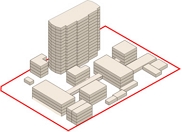


 Buildings within campus
 Courtyard
 Open space
 Campus boundary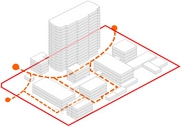

 Circulation
 Campus boundary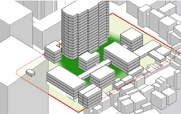
 Open space
 Outdoor spaces provide privacy
 Campus boundary