Regeneration Strategies for Mitigating Multi-Dimensional Conflicts in Asian University Cities : An Inductive Analysis of University–Community Spatial Relations
ⓒ 2026. KIEAE all rights reserved.
Abstract
This study explores university city regeneration as a key pathway for promoting regional economic growth and social development. It develops an encyclopedic knowledge base on university city regeneration and systematically examines conflicts and resistance emerging from university–community spatial relationships across social, environmental, and economic dimensions. Based on this analysis, the study proposes spatial strategies to address conflicts and resistance in university city development.
This study adopts an evidence-based inductive analytical approach. By reviewing 55 university city regeneration projects implemented among the top 100 universities in Asia to promote regional economic revitalization, it identifies social, environmental, and economic conflicts and resistance emerging in different spatial contexts, analyzes their causes, and proposes corresponding spatial strategies.
The study finds that conflicts and resistance in university city development stem not only from social tensions between universities and adjacent communities but are also closely linked to structural mismatches in resource allocation and financial support. When negotiations stagnate, university campuses emerge as strategic sites. The study further proposes five categories of spatial strategies, in which the adaptive reuse of idle spaces and interventions in digital space offer alternative pathways to alleviate conflicts and resistance in university city development at the spatial level, providing practical guidance for promoting equitable resource allocation and supporting the sustainable regeneration of university cities.
Keywords:
Urban Regeneration, University City, University-Community, Conflicts And Resistance, Spatial-Strategies1. Introduction
The United Nations General Assembly declared the years 2005~2014 as the Decade of Education for Sustainable Development (DESD) [1]. In a knowledge-based economy, universities serve as both educational and professional credentialing bodies as well as hubs for collaboration between industry and the adjacent community [2]. The form and function of university campuses are constantly changing in response to the social and economic development of cities. Brennan and Cochrane [3] reported that the socioeconomic impact of universities on their localities is more important than global campus institutions.
The modernization of higher education is increasingly reflected in the development of university cities [4]. Urban-type campuses emerged as a result of the twentieth century’s rapid urban expansion, which directly connected universities with adjacent communities. This allowed universities to interact more directly with the urban community. In addition to producing and disseminating knowledge, universities play a crucial role in the growth of knowledge-based cities by serving as centers of knowledge exchange between local society and local development. The community and the university have a symbiotic relationship, and the university plays a role in the economic development of the city [5].
Bender [6] proposed that cities and universities are interrelated and that this relationship is developed in close cooperation between cities and universities and is difficult to separate in a dichotomous manner. Triple helix theory, first proposed by Etzkowitz in 1995, holds that there is an unbreakable bond between university, industry and the government (UIG) [7]. The talent produced by the university affects the adjacent community, so the university city is intertwined with the stakes of both the university and the city. The process of urban regeneration involves materializing the allocation of urban spatial resources. Building university city is an important part of the long-term urban regeneration strategy, causing changes in the form of universities and their adjacent communities as specific areas or communities are upgraded or transformed [8].
Revitalizing the university’s economic entrepreneurial clusters is essential for city regeneration, fostering innovation and enhancing the future value of youth, universities, and regions. However, advancing projects in university cities often raises concerns about land expansion, gentrification, and increased housing rents near university [9]. In this regard, addressing the limited space for university city development, rising employment demands, and the complex relationship between universities and their adjacent communities is key to achieving mutually beneficial outcomes.
The isolation of the university from the urban environment creates a multidimensional conflict between the university and the adjacent community. Previous research has primarily focused on university-industry collaboration and development models in university cities, often addressing conflicts through negotiation-based approaches [10,11]. However, existing studies often fail to systematically link the contradictions that emerge when consensus between universities and communities cannot be reached. There is a lack of analytical frameworks that unpack the underlying conflicting logics between institutional and local interests. It is hoped that the research for design approach concept can help fill this gap [12].
Therefore, drawing on practical projects in university cities, this study aims to develop an encyclopedic knowledge base and to systematically identify and analyze spatial conflicts and resistance between universities and their adjacent communities, as observed in current cases. It strives to help provide planners and policymakers with effective spatial strategies to address these tensions in the context of university city development. Through the analysis of 55 practical cases presented in the following sections, the article distills five spatial strategies for university regeneration and supports the development of an encyclopedic strategy database for relevant stakeholders. The research questions are as follows: (1) What are the conflicts and resistance that arise between universities and communities in the development of university cities? (2) What strategies are employed to address various forms of conflict and resistance in current practice projects?
2. Literature Review
2.1. Different Spatial Relations between Universities and Communities
The university is one of the most important functions in urban space, and it is an essential component of the urban system [13]. Cities are under pressure from population density and socioeconomic changes, and universities, as centers of scientific research and innovation, need to play an active role in urban regeneration. This process fosters entrepreneurial clusters, job creation, and spending, which benefit the local knowledge economy and promote sustainable development [14]. Since urban regeneration and the need to diversify the distribution and sharing of urban resources, the boundaries of the university city are becoming increasingly blurred [15]. The university is no longer a traditional academic island with fixed boundaries.
The campus is home to the university’s main buildings and has clear physical boundaries [16]. Breaking down university boundaries to improve integration with the community can help transform the knowledge economy, benefiting both the university and the community. In order to reduce the physical separation between the university and the community and to strengthen the lack of available continuity around the university, based on the land use characteristics surrounding universities, Yu [17] categorized the relationship between universities and communities into three types: independent, subordinate, and supplementary. Unlike large-scale communities, campus village is located near campus in an area with a variety of amenities that complement the university’s operations [18,19]. Space types can be classified into three spatial relationships based on university boundaries and community enclosure: full open space, semi-open space, and enclosed space. At the same time, they can be functionally classified as closed, clustered, and embedded [20].
A university city is a partnership between the university, the government and their adjacent communities [2]. Building a university city for urban regeneration helps to revitalize the community’s diversity. By incorporating the unique characteristics of the area, a university city can create a social and cultural space that encompasses both the campus and the adjacent community [21]. However, when it comes to the development of university cities, we cannot rely solely on the spatial integration of universities and their adjacent communities into each other’s open environments to stimulate the development of local socio-economic areas. There are different conflicts and resistance to integration between universities and their adjacent communities in different situations of university city development.
2.2. Major Conflicts and Resistance between Universities and Adjacent Communities
From the environmental dimension of university–community relations, universities and adjacent communities are often disconnected both physically and psychologically. Although their co-development has the potential to promote local entrepreneurship and employment growth, integrating university–community relations remains challenging in practice [22]. Physically, universities’ breaking down of physical separation frequently involves the expansion of physical space, resulting in community conflicts such as rising land prices and environmental damage in adjacent communities [9]. Psychologically, the perceptions and needs of the various university and community stakeholders differ [18].
At the social dimension, from a university safety and security standpoint, there is a conflict between privacy on campus and safety and security regulation in the adjacent community [23]. From the standpoint of community rights and interests, the development of universities is frequently supported by the government, leaving the community in a position of passive acceptance and the possibility of social inequality [24]. This conflict lies in the existence of cognitive differences between relevant stakeholders (e.g., local residents, university students and faculty, etc.). Stakeholders’ cognitive differences are one of the main reasons that lead to communication and create conflicts [25].
Considering the economic dimension, cooperation between the university and the community is crucial in the development of university city. However, in the process of cooperation, most people believe that there is a dichotomy between the two, i.e., the interests of the university take precedence over the interests of the community [26]. The acceptance, rationality and sustainability of the local residents are key to the socialization of the university city’s development [27]. The social dimension reveals that this “invisible” boundary differs from the concrete boundary of the environmental dimension, and bridging this gap requires time and communication.
2.3. Different Strategies for the Conflicts between University and Community
Bruning et al. [22] identified two prevalent strategies for university-community collaboration. One involves universities acquiring resources from adjacent communities, and the communities to serve the university. The other emphasizes reciprocal engagement, wherein universities contribute expertise to address community needs while jointly developing entrepreneurial programs with adjacent communities [28]. The cooperation between the university and the community requires establishing a system of equal relations and adopting a decentralized approach for the university in carrying out projects and updating activities to achieve equal social rights and interests. Encouraging students to participate in community activities creates a strong partnership between universities and communities [10].
Strier [29] in his research on university and community relations mentions the bottom-up approach of engaging local residents as conducive to democratic decision-making. The research of Mapes et al. [30] bridges the divide between different stakeholders in the community through place-making and place-marketing of the space. A model of engagement that realizes co-creation while moving away from economic deficits by creating institutions that equally value the regulation of interests between the university and community. However, UIG’s triple helix theory of the triple relationship, which brings together universities, industry, and government, dissolves traditional barriers between universities and cities via the knowledge economy [7].
Incorporating universities into community economic development plans, as well as attracting businesses and entrepreneurial clusters, can boost the economic vitality of both universities and communities. Economically oriented university–community regeneration activities can further enhance the entrepreneurial potential of adjacent communities, including disadvantaged groups [28]. Establishing efficient ways of communication and effective channels of contact between university and community in order to promote local economic development, improve the conflict between university and community, and realize the effect of mutually beneficial cooperation [18].
The development of university cities theoretically promotes regional economic development and the competitiveness of adjacent communities. Most existing studies [11] focus on UIG collaborative models and their respective approaches to addressing contradictions and resistance through specific case studies. In addition, several studies [17,20] have explored the relationship between various forms of enclosure and land use at the interface between universities and their adjacent communities, using single or multiple case study approaches. Conflicts and resistance between universities and their adjacent communities often focus on the equitable distribution of social resources and economic benefits [23,26]. The strategies adopted to address equity in the distribution of social resources and economic benefits between universities and their adjacent communities are generally based on bottom-up, mutually negotiated approaches, often with economic development as a shared goal. This often results in prolonged consultation cycles or project failures due to issues of social equity and benefit distribution. Overall, existing research lacks a systematic and comprehensive account of spatial strategies for the sustainable development of university cities, particularly when negotiations break down or spatial constraints limit conventional planning approaches.
To address this gap, this paper aims to develop an encyclopedic knowledge base of university regeneration strategies, bridging research and practice to support more effective planning and policy-making. To achieve this, this paper examines 55 cases of university cities and systematically identifies the spatial strategies employed in response to various forms of conflict and resistance. It investigates the various forms of conflict and resistance that arise between universities and their adjacent communities in the context of university city development, with particular attention to spatial relationships across social, environmental, and economic dimensions. It further examines the spatial strategies adopted in response to challenges such as negotiation impasses and spatial constraints.
3. Research Design
Physical clusters in university city change the relationship between university and local adjacent community [31]. Asia is the world’s most populous and culturally diverse continent, providing researchers with a wealth of material and multiple analytical perspectives. Additionally, Asia is one of the world’s fastest-growing regions, with many countries experiencing rapid industrialization, urbanization, and industrial transformation, offering valuable cases for studying economic development models and social changes [32]. These differences are due to both economic aggregates and historical context, as well as social structure and culture [33]. Under coordinated UIG development, the spatial location of entrepreneurial clusters can stimulate project advancement and improve regional resources [7]. Therefore, we take major Asia university city projects as the objects of study and analyze their spatial composition in terms of the relationship between the spatial characteristics of university students’ entrepreneurial clusters and local society.
3.1. Step 1. (Data Source and Study Site Selection Strategy)
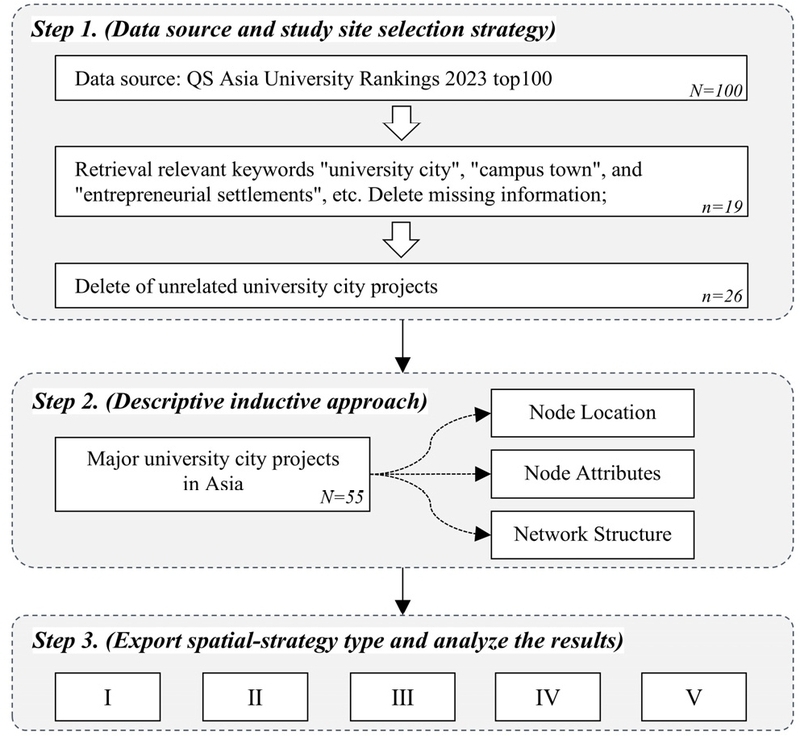
The quality and global competitiveness of national higher education are reflected in university rankings [34]. The QS World University Rankings reflect universities’ overall strengths in research, teaching, employment and internationalization [35]. At the same time, highly ranked universities can take advantage of more abundant resources and funding opportunities. To illustrate the development of major university cities in Asia, this study uses the top 100 universities in the QS Asia rankings in 2023 (the year in which the data were collected) as the initial sample. University city projects associated with these universities were used as the basis for data collection and analysis. Data were collected from Asia’s top 100 universities, and those with university city projects are listed in Appendix Table A1. (Cases in bold are relevant to this article).
The study site selection strategy is as follows: (1) collate basic information on the top 100 universities ranked by QS Asia 2023; (2) identify university city projects through official university websites and Google searches using keywords such as “university city”, “campus town”, and “entrepreneurial clusters”; (3) exclude cases with missing or insufficient information, or those that do not meet the inclusion criteria above.
To ensure analytical relevance, case selection was conducted based on objective criteria aligned with the research focus on university–community interactions. Specifically, cases were included only if they: (1) involve identifiable university city projects; (2) are spatially adjacent to existing communities; and (3) demonstrate potential for functional interaction, such as through commercial services, daily amenities, and transportation linkages.
Spatial adjacency was determined based on the continuity of built-up areas between campus boundaries and the surrounding urban fabric. Cases were considered adjacent when no significant non-urban land separated the two, forming a continuous built environment.
3.2. Step 2. (Descriptive Inductive Approach)
The promotion and development of university cities involve regenerating and reconstructing social, environmental, and economic spaces across multiple stakeholders. This process refers not only to materialized physical space but also to the synergistic regeneration of social space. Universities, industries, and governments play different roles and operate under different institutional logics [7]. The underlying logic of physical urban space regeneration in university city development can be understood as a process of spatial restructuring, driven by the formation of entrepreneurial clusters among university students [36]. Analyzing each university city project case provides descriptions and summaries of node locations, node attributes, and network structures.
This study collected and organized data based on information from the official websites of major university campuses in Asia. There were 19 cases with missing or insufficient data. Moreover, not all university city projects were designed to promote urban development, create employment opportunities for university students, revitalize local economies, or improve relations with adjacent communities. Some projects focused on urban green space development or ecological protection, while others were initiated solely for campus expansion or research purposes.
3.3. Step 3. (Export Spatial-Strategy Type and Analyze the Results)
To improve the relevance of the analysis, a total of 45 cases were excluded from the initial dataset. These excluded cases are primarily characterized by the absence of identifiable university city projects, a lack of direct spatial interface with adjacent communities, or development in isolated or brownfield areas. As such, university–community interactions and related conflicts are either absent or not yet observable in these cases, making them unsuitable for analysis. Including these cases could weaken the explanatory power of the study. As a result, 55 university city projects were retained in the final sample.
The analysis’s results are summarized into five spatial relationship types for university city development by visualizing abstract relationships with cases and theories. Furthermore, the triple-bottom line (social, environmental and economic, dimensions) framework for sustainable development can be used to assess the logic of each type [37]. Based on the results of the analysis, the regeneration strategy of university city development is investigated in order to address the conflicts that arise as a result of the university city’s development through the various spatial relationships between the university and the community. The analytical framework is shown in Fig. 1.
Analytical framework
4. Results and Analysis
4.1. Current Status of the University City Project
According to the university city data, most internationally competitive high-quality universities have a positive attitude toward the employment and entrepreneurship of college students. Over 70% of the 100 major sample universities in Asia have a positive attitude, with more than 50% of projects in close proximity to the community. Among them, China has the highest percentage of spatial distribution of university city projects, followed by Japan, South Korea and other Asian countries. However, there are differences in urban development policies and university development environments in different countries.
Since the reform and opening up, China has built many national university science and technology parks to accelerate industrial transformation and combine industry, academia and research as a strategic goal of urban renewal and development [38]. Most of this was done through the development and expropriation of land for construction in the context of vigorous urbanization and the transformation of the knowledge economy around the 1990s. Japan’s universities have well-established entrepreneurship and innovation departments in connection with the high-tech and pharmaceutical industries and provide entrepreneurship and employment opportunities for young college students. Among other things, specialized university faculty members provide industrial innovation consulting and guidance services for students and faculty, and support measures are provided to enhance the innovation ecology of university-industry collaboration in terms of intellectual property rights, innovation networks, and business promotion [39]. Some universities also provide specialized university laboratories and conference office space to assist university students in entrepreneurship and innovation. Korean universities emphasize the integration of industry and academia in entrepreneurship and employment while focusing on revitalizing the local economy and sharing university and local adjacent community resources to avoid social conflicts and strengthen interregional cooperation [19]. Compared with the development of university cities in China and Japan, the Korean urban university program favors more bottom-up policy measures. Universities in countries such as Singapore and Malaysia have had similarly remarkable results in the development of university entrepreneurship and employment in the context of the knowledge economy.
4.2. Descriptions and Inductions of Spatial Regeneration in University Cities
Entrepreneurial firms are located near universities, resulting in lower costs for industry-university-research cooperation [40]. Entrepreneurial clusters interact with the local adjacent community outside of campus thanks to collaboration among UIG. The acceptance or rejection of this stronghold by the local adjacent community influences the development of urban space into a dynamic “social space”.
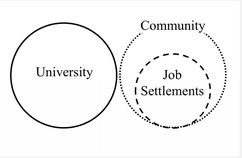
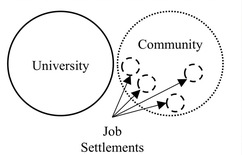
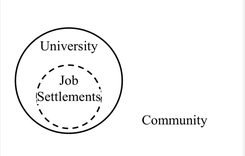
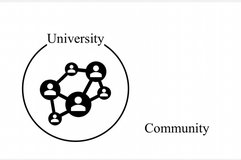
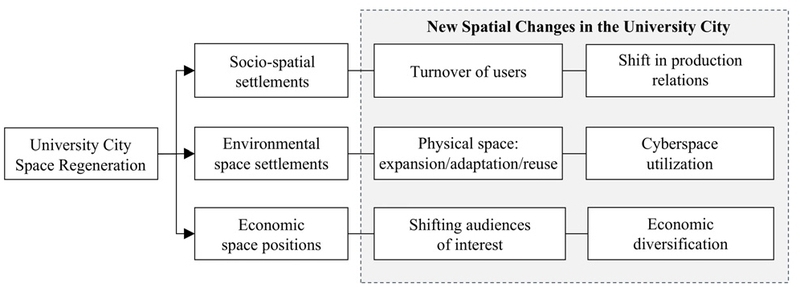
In terms of the social dimension, changes in the roles of space users lead to a transformation in production relations. The physical environment involves the expansion, transformation, and reuse of physical space, as well as the construction of network-based virtual space, through which digital technologies are integrated into urban systems and facilitate innovation and sustainable urban development [41]. Accordingly, the changes in the new space of university city development can be understood in terms of three dimensions. The spatial regeneration of the university city is presented in Fig. 2.
The process of spatial regeneration in University City
The environmental and social costs of urban form are a subject of concern for policymakers and spatial planners. The transformation of spatial organization allows space to functional improvement under different physical spatial constraints [42]. The analysis of the collected data reveals that different organizational forms in different sectors provide a variety of options for building university cities rather than a homogenous replication of a university city types.
A typological analysis of major university city projects in Asia was conducted through linkage patterns, hierarchical laws and spatial organization of urban development. Based on the spatial relationship between universities and communities, university city projects can be categorized by differences in the location of entrepreneurial and employment clusters, differences in the attributes between universities and communities, and differences in real or virtual binary spaces in the spatial network structure of urban flow [43].
In addition to providing a categorical framework, we analyze the complex interconnections between university space and urban economic revitalization. By enhancing the understanding of university city development among key stakeholders (such as policymakers, local residents, and university students) the research seeks to inform more inclusive and effective planning strategies. The analysis is further structured around the concept of sustainable development, commonly defined by the triple bottom line of environmental, economic, and social dimensions [37]. Using changes in physical space as the main criterion, the university city projects were categorized to reflect their development trajectories. Ultimately, the study identifies different development strategies for university cities to promote sustainable urban development while incorporating the physical space advantages of their respective universities.
The revitalization of cities and their adjacent communities is reflected in both existing and potential job creation [14]. Previous studies on smart city development, particularly those adopting the triple helix framework, have demonstrated a positive relationship between the co-location of government, academia, and industry and the aggregation of entrepreneurial employment [44]. Building on this insight, this study categorizes university cities according to different patterns of entrepreneurial job concentration across university city programs. The categorization criteria are established based on the spatial distribution of university students’ entrepreneurial jobs, the spatial regeneration attributes of university cities, and the structural characteristics of spatial networks. Moreover, physical space possesses distinctive properties that can be abstracted from cognitive foundations [45]. Accordingly, each university city program encompasses social, environmental, and economic dimensions, shaped by factors such as the location of entrepreneurial clusters within and beyond university boundaries, the acceptance of adjacent local communities, and their broader economic impacts. The criteria to describe them are shown in Table 1.

Category description
4.3. Derivation of the Types of University Cities
This section categorizes the clusters of young college students’ employment and entrepreneurship in each university city program according to geographic distribution and hierarchical types. Based on differences in the distribution of university students’ entrepreneurial job clusters, the type of development for the university city is derived with regard to physical materialization. Thus, the development logic of the spatial regeneration of university cities is explored in conjunction with the development characteristics of university cities, which are categorized according to the structural differences in the location of enterprises (i.e., entrepreneurial clusters). The concept of university city development is abstracted from a wide range of theories, and five types of university cities are derived to explain how university cities contribute to urban economic development.
These five types have a progressive relationship. UIG activities are categorized in terms of the degree of cooperation with the surrounding local adjacent community and the degree of influence on the regional economy in the context of the interest of self-generated roles. Moreover, the potential of different types of sustainable development in the current case is analyzed. On the basis of a framework of sustainable economic, social, and environmental development, the content of each type and representative university city projects in Asia are summarized to explain the changes in physical space and the direction of socioeconomic space, as shown in Table 2.
Strategies for university-community conflicts
4.4. Description and Induction of Spatial Strategy Types in University Cities
Table 2. shows that the Type Ⅰ is applicable when there is a campus village or adjacent community around the university that provides part of the land space as a base for university students to create business startups and for industrial companies to move in. Tsinghua Science Park in Beijing, China, is an example of this type of project; it was approved by the Ministry of Education and Beijing Municipality and began construction in 1994 [46]. In 2008, Tsinghua Science Park introduced a new logo, TusPark, and established TusHoldings, which absorbs private enterprises and social capital to market and standardize business operations. University science and technology parks are a three-way win-win model for universities, businesses, and the government, with universities benefiting from preferential policies such as taxes and land leasing, businesses using R&D resources to transform their achievements, and the government leveraging university R&D resources to drive the local economy [19]. This is done by compensating the local adjacent community. The advantages include a reduction of conflicts with the local adjacent community and the availability of a living infrastructure in the neighborhood. The disadvantages include the relatively passive nature of economic compensation and prolonged construction time due to the deliberation and construction cycle.
The Type Ⅱ is suitable for a supply of physical space through small-scale renovation in the form of a sharing economy, such as leasing, by negotiating with local building owners when there is no hope of obtaining unused land or acquiring a complete site through negotiation with the local adjacent community. The government plays a facilitating role by listening to the needs of various stakeholders from the bottom up and mediating conflicts between them. For example, the Korea University-Anam Campus town Project in Seoul, Korea, was established in 2016 to foster interaction, collaboration, and resource sharing between the university and their adjacent communities [19]. The project establishes a close connection between the university and the community by regenerating complex land such as subway stations, stores, and residences, as well as combining resident demands with university and government goals. The ‘Smart Entrepreneurship Workshop’ at Koryo University opened in 2017, supporting youth entrepreneurship, attracting businesses to the area, and promoting the regional economy through job creation. The project seeks to create a socially engaged university by integrating and sharing resources on and off campus [18]. The advantage is that the economic investment is relatively small, and mutual interests can be met through negotiation. The disadvantage is that the type and scale of the industry is severely limited, and conflicts are likely to arise between neighbors.
The Type Ⅲ applies to the reuse or reconstruction of space through unused building space or land on a campus when space outside the university cannot be used. The university becomes the provider of the space, and cooperation from the university is needed. The ERICA Campus Innovation Park Project in Ansan, Korea, was established in 2019 by Korea’s Ministries of Land, Infrastructure, and Transportation, Education, and Small and Medium-sized Venture Enterprises [47]. The project converts the campus green space into a semi-industrial zone and constructs an urban cutting-edge industrial park, with a focus on corporate occupancy, government-industry-academic-research collaboration, and corporate strength enhancement. Hanyang University’s ERICA campus has been designated as a special zone for innovation research and development, with resident companies benefiting from tax breaks and other support programs. The advantage is that there is no need for conflict with the external local adjacent community, and the unused space can be utilized in a sustainable manner. The disadvantage is that campus management becomes complicated, and social conflict changes to conflict between the interests of the university and the students.
Type IV involves constructing a networked environment through virtual platforms when physical space is insufficient to accommodate industries within or beyond the university. While not constrained by physical space, it is limited in the range of industries it can support and is typically applied to highly mobile and internationalized activities, such as Massive Online Courses (MOOC) [48]. The Kampus Digital project in Bandar Baru Bangi, Malaysia, exemplifies this type by establishing digital networks that support research, teaching, and community–industry interaction, while enhancing youth digital skills and employability. This type benefits from low spatial constraints, reduced costs, and minimal social or environmental conflict, but has limited industrial applicability and a relatively weak impact on local economic revitalization. Although represented by only one case, Type IV is retained as an independent type because it reflects an emerging, “de-spatialized” form of university–community interaction mediated through digital platforms and a shift toward digitally mediated relationships. It is better understood as a transitional form that complements, rather than replaces, spatially grounded types.
The Type Ⅴ is a hybrid type, through the intermixing of the first five types. The appropriate development type should be chosen according to the university’s self-generated environmental situation. The BizPod project in Subang Jaya, Malaysia, provides students with expert entrepreneurial guidance and shared office space [49]. It also streamlines human resource and payroll management by establishing a collaborative platform via online collaboration. It combines the Type Ⅲ and Type Ⅳ. In the early days, it may be a single type of development mode, but with changes in related factors, such as urban development, it can be achieved through a combination of modes to achieve a mutually beneficial development mode. The advantage is that construction is flexible, and the combination of construction types can be identified according to changes in industry and regional society. The disadvantage is that its management is the most complicated of all types.
A detailed analysis of each case is necessary in the effort to drive the development of university cities. Currently, three types (Type Ⅰ, Type Ⅱ, and Type Ⅲ) are most widely used in the development of university cities. Compared with other types, the Type IV has major limitations due to the lack of a specific physical space, constraints on industrial applicability, and the digital divide, particularly among elderly populations. In practice, elements of Type IV are often embedded within hybrid forms (Type V), suggesting that digital interaction tends to complement rather than replace physical spatial interactions. The Type V has a certain degree of complexity in terms of practical operation and management, but it is likely to be widely utilized in the future. Each type of university city spatial strategy needs to be UIG three people work together to achieve the purpose of community economic growth and the strategy of the top-level design, corresponding to the appropriate type of university city spatial strategy to balance the contradiction between the university and the adjacent community.
5. Discussion
This paper draws on existing cases to examine the various forms of conflict and resistance between universities and their adjacent communities during the development of university cities, analyzed across three key dimensions: social, environmental, and economic. University city related research is often based on one or several case studies, or the analysis of certain types of university city development strategies [4,11], while extensive research has focused on bottom-up negotiation strategies aimed at achieving equitable distribution of social resources and economic benefits between universities and their adjacent communities [23,26], there remains a lack of synthesized development spatial-strategies for cases where consensus cannot be reached, in which it is difficult to understand the development of university cities from a comprehensive and diversified perspective.
Universities are not only socioeconomic assets to cities, but also facilitators of participation in city services. Theoretically, the development of university cities is conducive to the revitalization of the local economy, but there is some resistance in the actual development [2]. Based on the perspective of research for design, this paper integrates a large amount of university city information and summarizes its characteristics and development strategies. It is found that different spatial relations of university city projects development conflicts exist not only between the universities and their adjacent communities, but also financial investment and nature protection and built space reuse etc. resistance [14,29].
The primary contributions of this study are: (1) It systematically identifies the underlying logic of conflicts and resistance between universities and their adjacent communities in the development of university cities, analyzed across the social, environmental, and economic dimensions within the context of urban regeneration; (2) It synthesizes a range of existing university city projects and distills five distinct spatial-strategies for university city development; (3) It provides effective inspiration and practical guidance for policymakers, urban planners, local residents, and other stakeholders involved in future research and planning efforts, offering spatial strategies that support regional economic revitalization.
Some limitations also need to be recognized. First, regarding case data collection, the analysis relies solely on publicly available online sources such as official university websites, etc. Some projects may have progressed further in later stages without timely updates, and the sample does not cover all university city projects across Asia. Second, university city development is a complex and multifaceted process; however, this study focuses only on the spatial relationships between a single university, its adjacent community, and entrepreneurial clusters, excluding projects jointly developed by multiple universities. Finally, the study identifies five types of university city strategies, which may be further refined and expanded in future research.
In summary, the development of university cities is the key to promoting the local economy and the industrial transformation of the knowledge economy. By implementing diverse spatial strategies and detailed planning guidelines, university cities can reduce communication barriers between universities and their adjacent communities, thereby enhancing mutual economic benefits such as income generation and alleviating existing tensions. In particular, strategies such as on-campus space reuse and cyberspace development contribute to the harmonious integration of regional communities and help prevent the homogenization of university city models. As more and more factors such as knowledge and technological changes are incorporated, the development of university cities will be a process of continuous development and change. Future research can be based on the five types of this study with different factors of change.
6. Conclusion
Although the development of university cities has received considerable attention in both academic and practical domains over recent decades, research in this area has largely been confined to isolated development models and application scenarios, without systematically laying out renewal strategies that address the relationship between universities and their adjacent communities. In the context of the knowledge economy, universities play a vital role in driving regional economic development. However, university regeneration, while essential for sustaining economic growth, also presents significant challenges for urban governance and operational management.
This study aims to develop an encyclopedic knowledge base on university regeneration and to systematically investigate the conflicts and resistance between university cities and their adjacent communities in relation to spatial relationships across social, environmental, and economic dimensions. The resulting knowledge base provides a comprehensive theoretical framework and strategic reference to support the sustainable and symbiotic development of university cities. This study addresses the following research questions: What are the conflicts and resistance that arise between universities and their adjacent communities in the development of university cities? And what strategies are employed to address various forms of conflict and resistance in current practice projects?
To achieve this, the study inductively analyzes 55 selected university city projects across Asia. Building on this foundation, it identifies and categorizes spatial strategies in relation to social, environmental, and economic dimensions, tailored to varying developmental conditions. In particular, by establishing five distinct types of university city development spatial strategies (each characterized by distinct spatial relationships) the study further examines diverse regeneration approaches aimed at addressing the complex forms of conflict and resistance that frequently arise in such contexts. In situations where negotiation is not feasible, the reuse of campus spaces and the development of cyberspace offer alternative pathways to enhance collaboration among UIG stakeholders, balance regional interests, and promote sustainable development. Ultimately, dismantling the barriers between universities and their adjacent communities, along with moving beyond binary oppositions, is essential to advancing university regeneration and fostering more inclusive and collaborative urban futures.
The findings of this study reveal that the development of university cities is not only marked by conflicts and resistance arising from disagreements between universities and their adjacent communities, but also by deeper structural contradictions such as the unequal allocation of resources, limited physical space, and insufficient financial compensation. When these conflicts cannot be resolved through negotiation and coordination, universities can shift their entrepreneurial focus from off-campus to on-campus by leveraging campus space reuse and cyberspace development. This approach facilitates the integration of educational and social resources, thereby accelerating economic transformation and industrial upgrading. These findings offer both theoretical insights and practical guidance for future regeneration efforts, serving as a valuable resource for policymakers, urban planners, community residents, and other stakeholders.
References
-
I. Mulà, D. Tilbury, A United Nations decade of education for sustainable development (2005–14): What difference will it make?, Journal of Education for Sustainable Development, 3(1), 2009, pp.87-97.
[https://doi.org/10.1177/097340820900300116]

-
P. Benneworth, D. Charles, A. Madanipour, Building localized interactions between universities and cities through university spatial development, European Planning Studies, 18(10), 2010, pp.1611-1629.
[https://doi.org/10.1080/09654313.2010.504345]
-
J. Brennan, A. Cochrane, Universities: in, of, and beyond their cities, Oxford Review of Education, 45(2), 2019, pp.188-203.
[https://doi.org/10.1080/03054985.2018.1551198]
- C.-Y. Sum, A great leap of faith: Limits to China’s university cities, Urban Studies, 55(7), 2017, pp.1460-1476.
- B.J. Hains, K.D. Hains, Symbiotic university-community partnerships: The good, the bad & the ugly, Community Development, 55(3), 2024, pp.407-419.
- T. Bender, The university and the city: From medieval origins to the present, New York: Oxford University Press, 1988.
-
H. Etzkowitz, Innovation in innovation: The triple helix of university-industry-government relations, Social science information, 42(3), 2003, pp.293-337.
[https://doi.org/10.1177/05390184030423002]
-
M. Fernández-Esquinas, H. Pinto, The role of universities in urban regeneration: Reframing the analytical approach, European Planning Studies, 22(7), 2014, pp. 1462-1483.
[https://doi.org/10.1080/09654313.2013.791967]
-
A.M.S. Mohammed, T. Ukai, Agent-based modelling for spatiotemporal patterns of urban land expansion around university campuses, Modeling Earth Systems and Environment, 9, 2023, pp.1119-1133.
[https://doi.org/10.1007/s40808-022-01551-y]
-
K.M. Reardon, Promoting reciprocity within community/university development partnerships: Lessons from the field, Planning Practice & Research, 21(1), 2006, pp.95-107.
[https://doi.org/10.1080/02697450600901566]
-
S. Zhang, X. Wang, Does innovative city construction improve the industry–university–research knowledge flow in urban China?, Technological Forecasting and Social Change, 174, 2022, 121200.
[https://doi.org/10.1016/j.techfore.2021.121200]
- P. Ding, et al., Exploring adults’ passive experience of playing children in cities: Case study of an urban public space with open and integrated settings in Copenhagen, Denmark, Cities, 145, 2024, 104715.
- W. Guo, et al., Research on the indicators of sustainable campus renewal and reconstruction in pursuit of continuous historical and regional context, Buildings, 12(10), 2022, 1508.
-
S. De Medici, P. Riganti, S. Viola, Circular economy and the role of universities in urban regeneration: The case of Ortigia, Syracuse, Sustainability, 10(11), 2018, 4305.
[https://doi.org/10.3390/su10114305]
-
M. Zapp, M. Marques, J.J.W. Powell, Blurring the boundaries. university actorhood and institutional change in global higher education, Comparative Education, 57(4), 2021, pp.538-559.
[https://doi.org/10.1080/03050068.2021.1967591]
-
T. Way, The urban university’s hybrid campus, Journal of Landscape Architecture, 11(1), 2016, pp.42-55.
[https://doi.org/10.1080/18626033.2016.1144673]
- J.D. Yu, A Study on construction of development model for campus town activation, (Doctoral dissertation), Korea: Hongik University, 2013.
- A. Jang, University-community relations in urban regeneration: A study on the conflict between students and residents and the role of the university, Journal of Asian Sociology, 49(2), 2020, pp.163-191.
-
D. Kim, S. Lee, S. Kim, Study of campustown projects for the sustainable win-win growth of universities and communities, Sustainability, 15(13), 2023, 10062.
[https://doi.org/10.3390/su151310062]
- L. Zeng, Regeneration of campus-proximate areas for better university-city relationship (Master’s thesis), Politecnico di Torino, 2024.
-
S. Bylkova, E. Chubova, Role of the university socio-cultural environment in formation of students’ emotional intelligence, European Proceedings of Social and Behavioural Sciences, 2021, pp.1359-1366.
[https://doi.org/10.15405/epsbs.2021.05.02.173]
-
S.D. Bruning, S. Mcgrew, M. Cooper, Town–gown relationships: Exploring university–community engagement from the perspective of community members, Public Relations Review, 32(2), 2006, pp.125-130.
[https://doi.org/10.1016/j.pubrev.2006.02.005]
-
K. Cundiff, Colleges and community crime: An analysis of campus proximity and neighborhood crime rates, Crime & Delinquency, 67(3), 2021, pp.431-448.
[https://doi.org/10.1177/0011128720974312]
-
P. Benneworth, University engagement with socially excluded communities, In: University engagement with socially excluded communities, Springer Netherlands, 2013, pp.3-31.
[https://doi.org/10.1007/978-94-007-4875-0_1]
-
J.Y. Kim, J.H. Kim, K.W. Seo, The perception of urban regeneration by stakeholders: A case study of the student village design project in Korea, Buildings, 13(2), 2023, 516.
[https://doi.org/10.3390/buildings13020516]
-
S. Danley, G. Christiansen, Conflicting responsibilities: The multi-dimensional ethics of university/community partnerships, Journal of Community Engagement and Scholarship, 11(2), 2022, pp.8-18.
[https://doi.org/10.54656/WPFJ9952]
-
C. Chen, F. Vanclay, T. Van Dijk, How a new university campus affected people in three villages: The dynamic nature of social licence to operate, Impact Assessment and Project Appraisal, 39(1), 2021, pp.2-10.
[https://doi.org/10.1080/14615517.2020.1769403]
-
E. O’brien, T.M. Cooney, Enhancing inclusive entrepreneurial activity through community engagement led by higher education institutions, Journal of Enterprising Communities: People and Places in the Global Economy, 19(2), 2025, pp.177-201.
[https://doi.org/10.1108/JEC-10-2023-0189]
- R. Strier, Fields of paradox: university–community partnerships, Higher Education, 68, 2014, pp.155-165.
-
J. Mapes et al., Building ‘college town’: Economic redevelopment and the construction of community, Local Economy, 32(7), 2017, pp.601-616.
[https://doi.org/10.1177/0269094217734324]
-
A.M. Mohammed, T. Ukai, M. Hall, Towards a sustainable campus-city relationship: A systematic review of the literature, Regional Sustainability, 3(1), 2022, pp.53-67.
[https://doi.org/10.1016/j.regsus.2022.03.004]
-
Q. Zhang et al., Urban development in Asia: Pathways, opportunities and challenges, Springer, 2017.
[https://doi.org/10.1007/978-981-10-2896-0]
-
E. Hershberg, K. Nabeshima, S. Yusuf, Opening the ivory tower to business: University–industry linkages and the development of knowledge-intensive clusters in Asian Cities, World Development, 35(6), 2007, pp.931-940.
[https://doi.org/10.1016/j.worlddev.2006.05.006]
-
C. Guo, et al., The effect of national higher education initiatives on university rankings, Humanities and Social Sciences Communications, 10, 2023, 527.
[https://doi.org/10.1057/s41599-023-02034-w]
-
B. Sowter, D. Reggio, S. Hijazi, QS World university rankings, In: Research analytics, Auerbach Publications, 2017, pp.121-136.
[https://doi.org/10.1201/9781315155890-7]
-
Y. Wu et al., Urban regeneration and re-use: China and Europe, Cities, 106, 2020, 102863.
[https://doi.org/10.1016/j.cities.2020.102863]
-
A. Ribeiro, L. Madureira, R. Carvalho, Evidence on how urban gardens help citizens and cities to enhance sustainable development. Review and bibliometric analysis, Landscape and Urban Planning, 236, 2023, 104766.
[https://doi.org/10.1016/j.landurbplan.2023.104766]
-
L.A. Sandoval Hamón, et al., From high-tech clusters to open innovation ecosystems: A systematic literature review of the relationship between science and technology parks and universities, The Journal of Technology Transfer, 49, 2024, pp.689-714.
[https://doi.org/10.1007/s10961-022-09990-6]
-
M. Ranga, T. Mroczkowski, T. Araiso, University–industry cooperation and the transition to innovation ecosystems in Japan, Industry and Higher Education, 31(6), 2017, pp.373-387.
[https://doi.org/10.1177/0950422217738588]
-
R. Huggins, D. Prokop, Network structure and regional innovation: A study of university–industry ties, Urban Studies, 54(4), 2017, pp. 931-952.
[https://doi.org/10.1177/0042098016630521]
-
J. Shao, B. Min, Sustainable development strategies for Smart Cities: Review and development framework, Cities, 158, 2025, 105663.
[https://doi.org/10.1016/j.cities.2024.105663]
- T. Beyes, R. Holt, The topographical imagination: Space and organization theory, Organization Theory, 1(2), 2020.
-
Y. Xu et al., Integration of migration and attention flow data to reveal association of virtual–real dual intercity network structure, Cities, 143, 2023, 104614.
[https://doi.org/10.1016/j.cities.2023.104614]
-
K.A. Suda, N.S.A. Rani, I. Boubekeur, Stakeholder collaboration for smart city development in Malaysia: A triple helix perspective, IEEE International Conference on Emerging Trends in Engineering and Computing (ETECOM), Riffa, Bahrain, 2025, pp.1-6.
[https://doi.org/10.1109/ETECOM66111.2025.11319031]
-
C. Freksa, Qualitative spatial reasoning, In: D.M. Mark, A.U. Frank, editors, Cognitive and linguistic aspects of geographic space, Springer Netherlands: Dordrecht, 1991, pp.361-372.
[https://doi.org/10.1007/978-94-011-2606-9_20]
-
K. Motohashi, The role of the science park in innovation performance of start-up firms: An empirical analysis of Tsinghua science park in Beijing, Asia Pacific Business Review, 19(4), 2013, pp.578-599.
[https://doi.org/10.1080/13602381.2012.673841]
- S.H. Lim, A study on the creation of campus innovation park in local university, Industry Promotion Research, 6(2), 2021, pp.11-20.
-
J.-P.D. Addie, From the urban university to universities in urban society, Regional Studies, 51(7), 2017, pp.1089-1099.
[https://doi.org/10.1080/00343404.2016.1224334]
-
G. Arumugam et al., Teaching nature and architecture: Student-led account of biomimicry innovations in the tropics, Biomimetics, 8(1), 2023, 13.
[https://doi.org/10.3390/biomimetics8010013]
Appendix
Appendix
Case description of major university cities in Asia