
Energy and Comfort Efficient Adaptive Learning Model for Service Areas in an Outdoor Sports Facility
ⓒ 2025. KIEAE all rights reserved.
Abstract
This research investigates the development and performance of advanced supply air control strategies aimed at simultaneously enhancing energy efficiency and sustaining acceptable indoor thermal comfort within the service areas of a sports facility. The primary objective is to derive control methodologies that strategically balance these two critical factors while promoting the maximum utilization of the spaces.
The research employed computational simulations to evaluate two novel control strategies, such as an adaptive model and a learning model by an artificial neural network algorithm, against a conventional thermostat over a week-long period.
The simulation results demonstrated significant energy savings: the adaptive model achieved an approximate 12% decrease in average energy consumption, and the learning model, which utilizes an artificial neural network algorithm, delivered a more substantial 22% reduction, respectively. These savings stem from the models’ capability to minimize system overshooting and mitigate signal fluctuations during operation. Furthermore, both proposed models showed a very high level of effectiveness in maintaining thermal comfort homeostasis compared to the thermostat. The network-based learning model proved particularly advantageous, confirming its improved ability to reduce unnecessary energy consumption via adaptive control and produce robust, effective regression results under varying environmental and operational conditions.
Keywords:
Service Area, Energy Consumption, Predicted Mean Vote, Adaptive Control, Learning Model1. Introduction
1.1. Research Purpose
This research investigates the critical role of an effective supply air control strategy in mitigating environmental challenges associated with current and future service areas in a sports facility. The primary objective extends beyond mere energy efficiency to also encompass methods for achieving and sustaining acceptable levels of indoor thermal comfort. The methodology centers on developing control strategies that simultaneously balance energy efficiency and indoor thermal comfort. A key component of this approach is maximizing the utilization of service areas in a sports facility, thereby minimizing the necessity for new construction. Specifically, the research evaluates the performance of the proposed control system under dynamic operational conditions. This includes assessing its efficacy under fluctuating heating and cooling loads across various temporal and spatial conditions. Particular attention is given to scenarios that promote building adaptability, such as the effective utilization of the service area, to further enhance resource management and operational flexibility.
1.2. Research Objectives and Methods
This research is designed around a set of distinct research objectives focused on optimizing the performance of a service area in a sports facility: To quantify the energy consumption and evaluate the indoor thermal comfort achievable when operating a retail and a food service within existing structures using computational simulation models; To employ simulation techniques to assess the inherent trade-off and relationship between energy consumption and indoor thermal comfort across a range of varied operating conditions; To investigate and propose strategies for improving space utilization within these areas, specifically aiming to support sustainable sports facility management. Following the detailed presentation of the methodology and the analysis of the simulation results, the paper will proceed with a critical discussion of the research’s strengths and limitations. The conclusion will outline the potential avenues for future research, emphasizing the need for expanding the dataset to enhance the statistical robustness and overall reliability of the findings.
2. Literature Review
2.1. HVAC Control
Heating, Ventilating, and Air Conditioning (HVAC) systems represent fundamental infrastructure components essential for supporting human activities within buildings, facilitating comfort for rest, work, and various other functions. Extensive theoretical research and practical technological advancements have been dedicated to optimizing the efficient operation of these systems. A primary focus in HVAC design involves applying fluid mechanics principles to analyze and manage airflow, leading to the development of specialized systems for effective air supply, ventilation, heating, and cooling. Concurrently, complementary technologies are applied to building envelopes such as enhancing thermal resistance to minimize undesirable heat transfer and maintain indoor temperatures precisely according to thermostat set-points [1~3]. Heightened awareness of energy crises and broader environmental concerns has increased the demand for sophisticated techniques to improve the energy efficiency of HVAC systems. Historically, the Proportional-Integral-Derivative (PID) controller has been an invaluable tool, particularly when computational hardware was limited. Its strength lies in its mathematically intuitive structure and transparent calculation process, making it widely utilized in applications where deterministic signal processing and clear engineering solutions are paramount. This allows for effective implementation of model-based control methods and facilitates the identification of physical errors in real-world scenarios [4,5]. More recently, Model Predictive Control (MPC) has emerged as a preferred technique for the efficient energy management of HVAC systems during operation and maintenance phases. MPC is frequently employed to derive mathematical and engineering solutions specifically for controlling the major components of heating and cooling systems [6,7].
The increasing scale and complexity of modern buildings necessitated more precise and nuanced control strategies than traditional methods could adequately provide. This context spurred the accelerated development of the Fuzzy Inference System (FIS). In the domain of thermal system control, many operational scenarios exist where high numerical precision offers marginal practical value. Furthermore, the inherent ambiguity in real-world thermal conditions presents challenges for deterministic models, which must resolve diverse situations into a single, precise input value, often resulting in low statistical validity. In these ambiguous situations, the FIS has proven highly effective in generating output results that accurately reflect real-world dynamics [8,9]. Both PID and Fuzzy Inference control methods have been recognized as robust solutions within the field of deterministic modeling, particularly when controlling thermal systems with limited prior operational data. The FIS model specifically excels at mitigating overshooting and suppressing excessive fluctuation (up-and-down oscillation) in control signals during system operation. This has been confirmed to enhance homeostasis in indoor temperature regulation, reportedly reducing control errors by over 50%. However, this improved stability may be correlated with a potential increase in energy consumption [10,11]. Consequently, research concerning FIS algorithms often shifts focus away from comprehensive control performance evaluation towards metrics assessing the proximity to target set-points and the accuracy of generated control patterns [12,13].
The rapid advancement in computing hardware including processors, memory, terminals, and power supplies has enabled the processing of large datasets that were previously unmanageable. This technological shift has facilitated the rise of data-driven methodologies, which are highly valuable for identifying energy-saving opportunities using external sources like building meter data and utility bills, circumventing the need for intrusive internal system observation. Various algorithms exist that process these vast datasets to virtually quantify the value of thermostat settings, modify HVAC scheduling, detect occupancy patterns, and predict heat load transfer across building envelopes. Leveraging this data, HVAC system studies can classify savings potential; for instance, research involving over 400 commercial buildings indicated a median energy saving rate achieved through reducing base loads and adjusting operational schedules [14~16]. The progress in information technology and sensor equipment provides various data-driven methods. However, despite the swift evolution of the techniques, significant challenges persist before widespread industrial adoption is achieved, particularly in the areas of HVAC system optimization and fault detection [17,18].
The evolution of various data handling techniques has significantly benefited the Artificial Neural Network (ANN) algorithm, which offers a sophisticated approach to addressing complex mathematical and engineering problems. ANN is particularly effective at explaining the multivariate causal relationships existing between various HVAC components [19,20]. The fundamental principle of heat transfer control in buildings involves establishing the correlation between internal heat gain (from sources like occupants or equipment) and heat loss through the building envelope components, such as exterior walls, roofs, and fenestration. Traditionally, heat sources common in architectural engineering, like stoves, fireplaces, and boilers, have been primary targets for control strategies since the inception of HVAC systems. To ensure effective heating and cooling air delivery, the control of dampers or valves regulating fuel and heat supply has been crucial. As technology has matured, the scope of HVAC system research has expanded to include both major and auxiliary components, such as boilers, fans, blinds, and partitions. Verifying the control performance of these components, both large and small, demands a very high-resolution time interval for simulation and experimental studies, leading several research efforts to achieve high precision at the level of mere seconds [21,22]. Control methodologies focused on reducing overshooting during system on/off cycles based on set-point temperatures have proven highly effective for improving energy performance. To bolster the statistical validity of learning from large datasets, commercial facilities are often utilized to ensure sufficient data size and reliability [23,24]. However, while considerable effort has been dedicated to enhancing the operational efficiency of the mechanical and electrical components necessary for precise control, it is plausible that opportunities for further energy savings in the overall system operation still exist.
2.2. Service Areas in a Sports Facility
There have been several types of research for sports facilities. Among them, analyses of building and operational characteristics for specific activities are one of the preferred issues for academic and practical research. Ice rinks are characterized by exceptionally high, continuous electrical consumption, dominated by refrigeration plants which maintain precise sub-freezing surface temperatures. Operational continuity requires sophisticated dehumidification and HVAC systems to prevent atmospheric condensation, while architectural requirements necessitate a dedicated, isolated, and large Ice Plant Mechanical Room proximate to the rink slab [25]. Conversely, baseball and football stadiums exhibit highly intermittent, high-peak electrical loads driven by extensive field illumination and temporary, massive crowd management needs, with energy usage sharply spiking only during event hours. Architecturally, these facilities prioritize complex segregated circulation paths for spectators, players, and service staff, requiring expansive service areas for concession logistics, large-scale toilet accommodation, and secure media/player facilities to manage hundreds of thousands of people effectively in short windows [26]. Finally, swimming pools and aquatic centers feature a high, continuous demand for thermal energy dedicated to water and air heating, counteracting evaporative and ventilation losses, with critical operational focus placed on stringent water quality control involving continuous chemical dosing and recirculation through dedicated, often subterranean, Plant Rooms housing filtration and balancing systems, all within a floor plan that strictly segregates wet and dry zones for safety and hygiene [27,28]. However, the several types of service areas in sports facilities have been neglected in operational or energy related research rather than the large-scale area for demonstrating major sports activities [28,29].
3. Research Method
3.1. Building Model
The U.S. Energy Information Administration’s Commercial Building Energy Consumption Survey (CBECS) has served as a foundational source for research across numerous sectors by documenting the energy consumption patterns of public, commercial, and residential structures. This comprehensive report specifically quantified the Energy Use Intensity (EUI) for fourteen primary building categories. Critically, while providing detailed data on these established types, the survey omits any corresponding information regarding service areas in several types of large-scale facilities [30,31]. Therefore, to predict service areas in a sports facility, the EUIs of similar building types are properly utilized such as food sales, retail, service, and others [30,31].
The service area of sports facilities is mainly composed of commercial facilities and restrooms. In the case of commercial facilities, it consists of stores that sell souvenirs related to teams or activities, and food services that sell fast food or alcohol. Therefore, it is common to configure, by using CBECS report, retail and food sales, and restrooms. It can be divided into large-scale facilities for baseball and soccer, special facilities that need specific mechanical plans such as ice rinks and swimming pools, and small-scale facilities for bowling and billiards. Since the service area planned for indoor and small-scale sports facilities is not much different from that of typical commercial facilities, this study mainly focuses the service area adjacent to the outside of a large stadium that effectively shows the characteristics of the sports facilities. Based on the size of the average value of service areas in five large-scale sports facilities, Fig. 1. shows a newly planned service area that consists of a retail, a food sale, and a restroom, and it is arranged linearly adjacent to the corridor outside the sports facility. Table 1. shows the geometry information of walls, roofs, doors, and windows constituting buildings in the service area. For a simulation input for outdoor conditions, the EnrgyPlus V9.5 weather data provided by the US Department of Energy was utilized. The time period was selected from 00:00 on October 24th to 24:00 on October 30th. This period requires high heating and low cooling loads in the middle of the change of seasons.
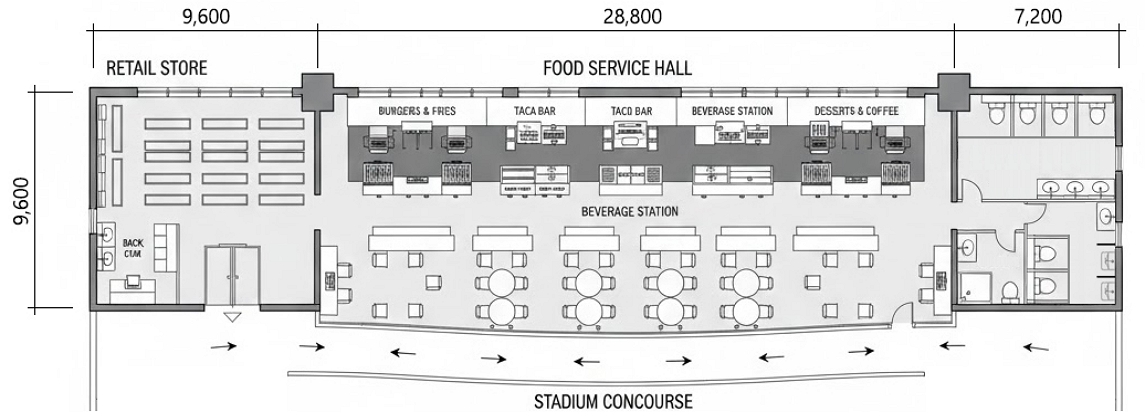
Service area floor plan

Geometry information of a designed temporary building
3.2. Thermal Control Method
The energy consumption of the model is calculated by formulating a straightforward energy balance based on thermal dynamics. This involves summing the heat input from the HVAC/supply system and subtracting the heat transfer (loss) across the building enclosure. By representing this energy exchange as the temporal change in the target indoor temperature, a descriptive equation suitable for developing the building simulation module can be derived [32].
| (Eq. 1) |
where, hout and hin are the heat transfer coefficients (W/m·K), k is the transmission coefficient (W/m·K), A is the area (m2), D is the depth of envelope (m).
The Predicted Mean Vote (PMV) index, standardized by EN ISO 7730 and introduced by Dr. P. O. Fanger, serves as the primary metric for assessing occupant thermal comfort [33,34]. An auxiliary indicator, the Predicted Percentage of Dissatisfied (PPD), complements the PMV. The PPD, convertible from the PMV equation, expresses the range of thermal dissatisfaction, where 100% signifies complete dissatisfaction and 0% indicates complete satisfaction. The simulation module utilizes six distinct variables as inputs to determine the PMV level: Dry bulb temperature; Relative humidity; Indoor air speed; Mean radiant temperature; Metabolic rate; Clothing insulation. To ensure efficient simulation, the following assumptions are applied: The indoor air speed is fixed at 0.1m/s. The mean radiant temperature is approximated as the dry bulb temperature, though with a one-hour time delay. The metabolic rate is held constant at 1.2 Met (normal working activity), and the clothing insulation is set to 1.2 clo (normal clothing) [33,34].
| (Eq. 2) |
| (Eq. 3) |
where, M is the metabolic rate and L is the thermal load.
In addition to the conventional thermal models, this research explores the control effectiveness of an adaptive process. As indicated in Fig. 2., this adaptive process consists of two different flows: The first one is for optimizing the supply air conditions; The second one is for adjusting the set-point temperature for heating and cooling. If the desired conditions are not met, the two processes act independently and determine the conditions of supply air and send the determined signal as a result of relatively small energy consumption among the two independent results.
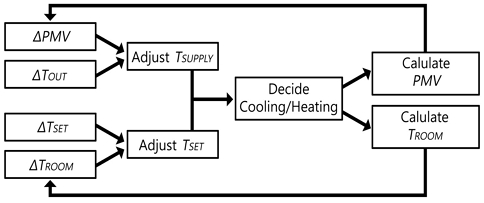
Adaptive process
In order to learn the data, the ANN is utilized as the predictive engine, integrating the results from both the thermal model and the adaptive process. This network is specifically structured as a multilayer perceptron (MLP), a type of fully connected network renowned for handling complex non-linear mapping problems [35,36]. The standard MLP employs a three-layer design (Input, Hidden, and Output Layers) to process and map the data. The fundamental operation involves each neuron calculating a crucial intermediate value, (nc), defined as the sum of its inputs (x1, ⋯, xk) multiplied by their weights (wai), plus an added bias (θb). This value is then passed through a non-linear activation function (gd) to produce the layer’s output [35,36]. The training of this predictive model was conducted using the scaled conjugate gradient algorithm over 1,000 iterations, with a setting of one epoch per iteration. The model’s performance was statistically significant, achieving a high R2 value for both controlled variables: 0.99195 for mass flow rate and 0.98995 for supply air temperature. The adaptive process and the ANN algorithm for an entire simulation model were combined in the Matlab and Simulink applications as described in Fig. 3.
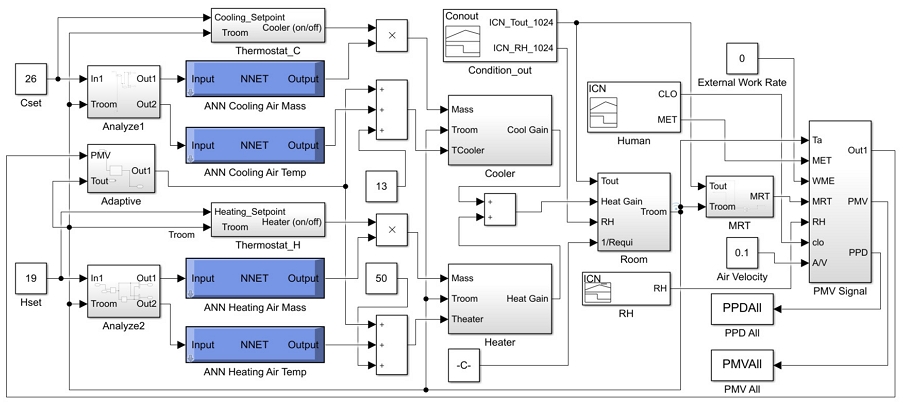
Simulation block model
4. Results and Discussion
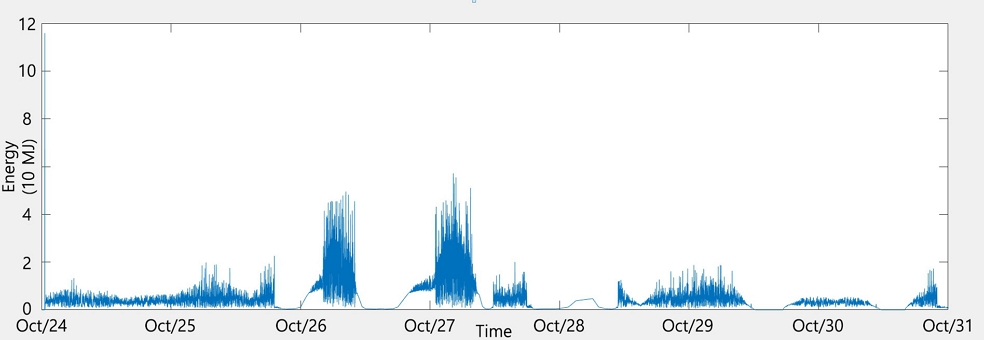
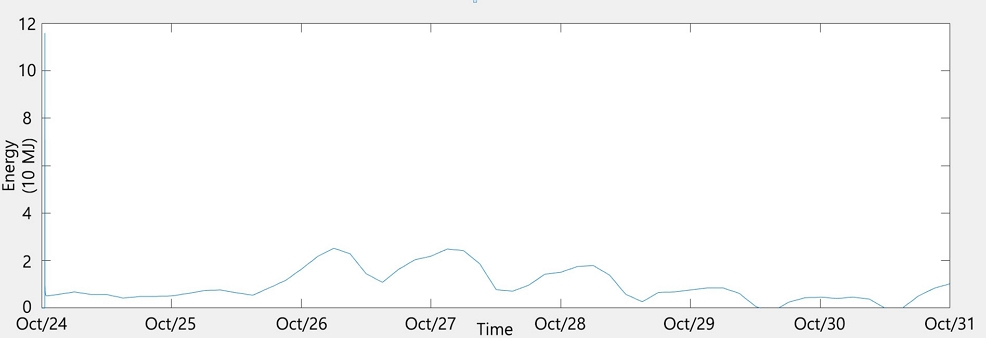
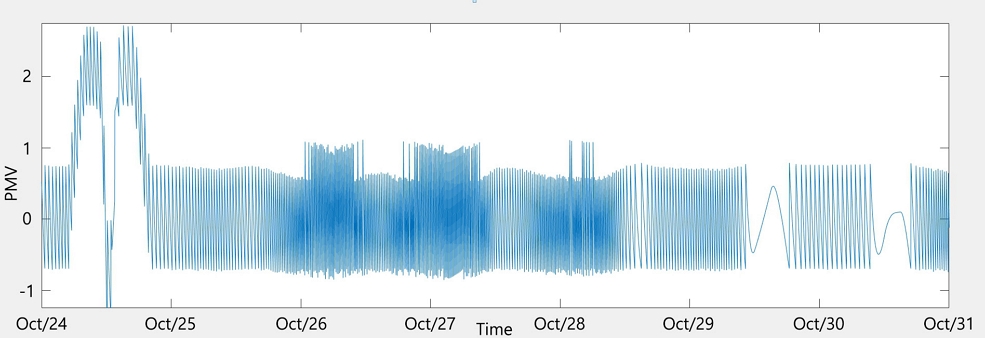
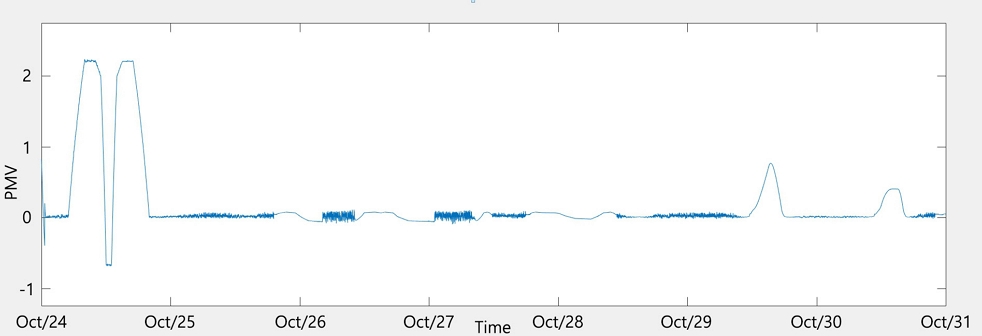
Fig. 4. shows the outside temperature from 0:00 on October 24th to 24:00 on October 30th in the Incheon area used as simulation input. Most of the daytime temperatures show a mild temperature of 10℃ or higher, but the daily temperature difference is relatively large because it may drop to 0℃ at dawn and night. However, from the afternoon of the 28th, an unforeseen temperature trend in which the minimum temperature is maintained above 10℃ can also be confirmed. One of the main goals of this study is to check how effective indoor temperature maintenance performance is compared to traditional thermostats in this outdoor temperature situation. As can be seen in Fig. 5., the control through the thermostat shows a typical pattern of repeatedly rising and falling between the dead-band region by 1℃ centering on the indoor setting temperature of 19℃ in autumn and winter. In the afternoon of the 29th and 30th, the heating supply does not work in the section where the outside temperature is above 19℃, showing a pattern in which the indoor temperature follows the outside temperature as it is. Fig. 6. shows the result of adaptation control, which is significantly different compared to the thermostat control. Like the results of the thermostat control, the indoor temperature is effectively controlled near the indoor setting temperature of 19℃ in most sections, except for some sections in which the outside temperature is higher than the set temperature. However, although some rise and fall can be confirmed centering on the set temperature, it can be confirmed that the vibration width is significantly less controlled. As can be seen in Fig. 7., the result of learning control through ANN significantly reduces this vibration and controls the indoor temperature in a smooth curve. These control patterns can expect two results. While high efficiency can be expected in maintaining the homeostasis of indoor thermal comfort by suppressing its fluctuation, this continuous control operation may be more likely to increase energy consumption than control of a thermostat and adaptive model that repeats on/off of the supply air. However, as control is performed within the dead-band setting range, it is expected that an energy reduction effect can be expected by suppressing unnecessary energy consumption in which a certain period of time is operated after the start of operation or the set-point temperature is reached. It is necessary to check the simulation results data on how these two effects eventually affect the total energy consumption. As can be seen in Fig. 8, in the thermostat control, heating energy up to 12MJ is used while the air supply operation is repeated on/off. It can be predicted that considerable energy is being used to raise the indoor temperature to the set-point value again when the set-point temperature is separated by the dead-band range. In Fig. 9., it is confirmed that the adaptive model significantly reduces the possibility of such unnecessary energy consumption, which occurs due to repeated air supply operation on/off. It is confirmed that the indoor set-point temperature is effectively reached with up to 6MJ of energy consumption by reducing the frequency of situations in which on/off occurs repeatedly. In Fig. 10., it can be seen that the advantages of the learning model are more prominent. The indoor temperature is effectively controlled even with energy consumption within 1MJ in most periods, except that 2~3MJ of energy is used in some periods on the 26th and 27th. Through numerical analysis of the simulation results, it is necessary to confirm how much effect of reducing energy consumption is. On the other hand, even in maintaining the homeostasis of indoor thermal comfort in Fig. 11., Fig. 12., and Fig. 13., high performance of the learning model can be expected except for the early stage of the simulation operation on 24th, as predicted by the the indoor temperature control results.
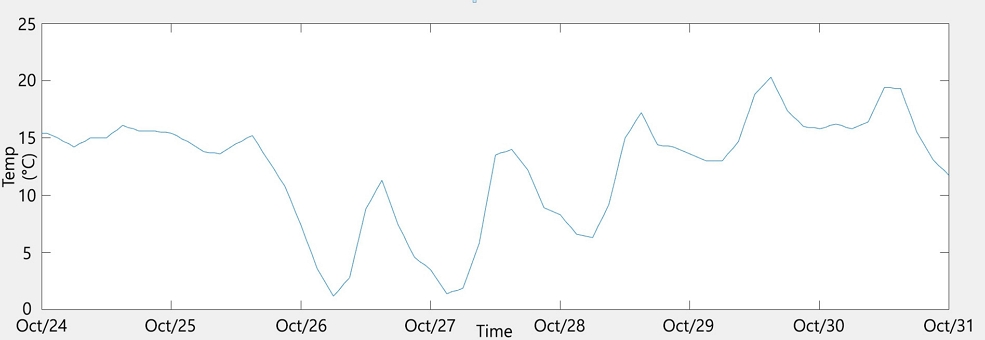
Outdoor temperature
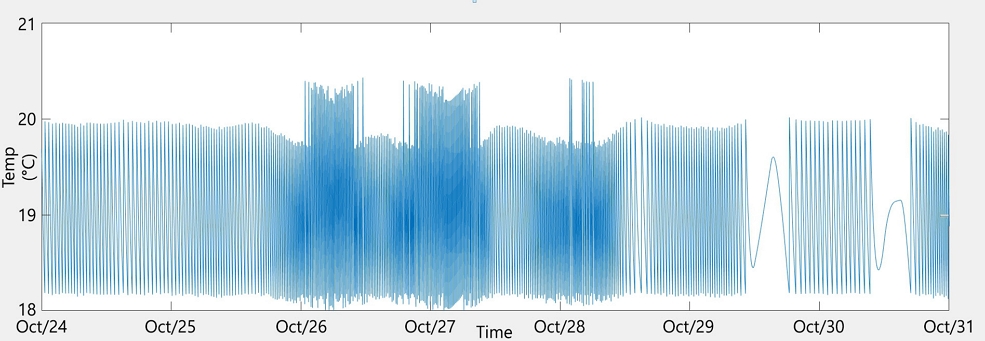
Indoor temperature by the thermostat
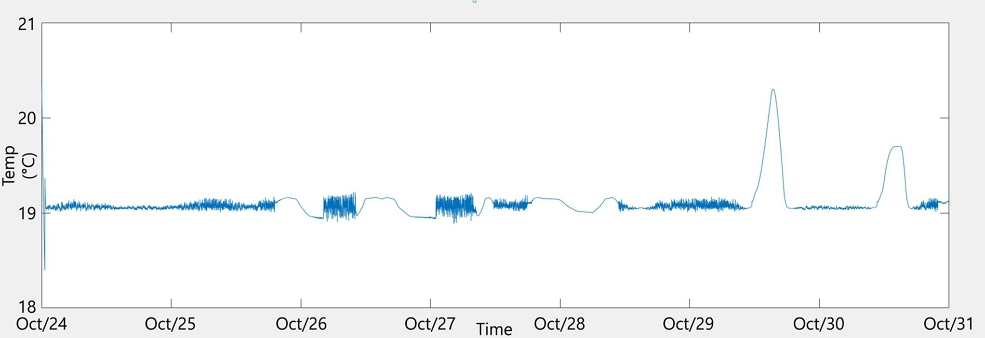
Indoor temperature by the adaptive model
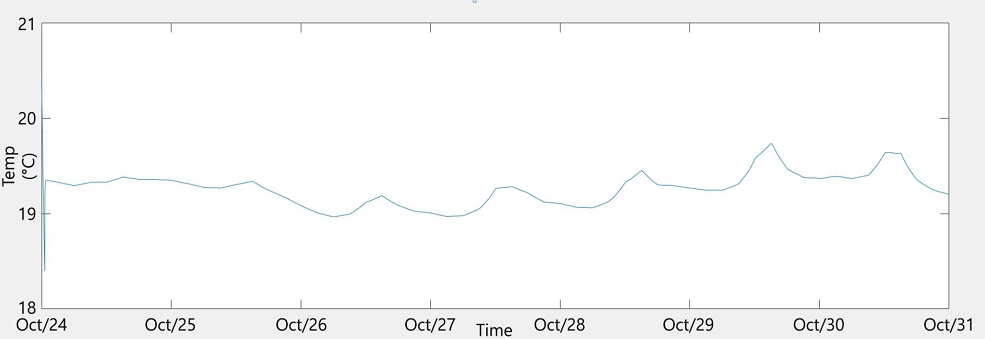
Indoor temperature by the learning model
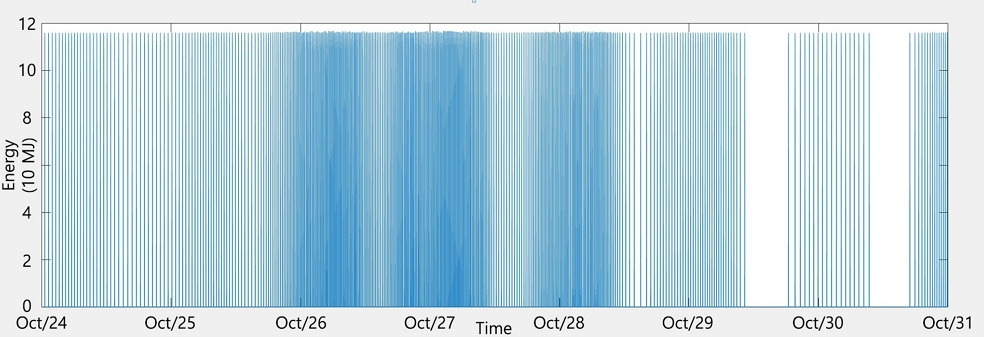
Thermal loads by the thermostat
Thermal loads by the adaptive model
Thermal loads by the learning model
Thermal comfort level by the thermostat
Thermal comfort level by the adaptive model
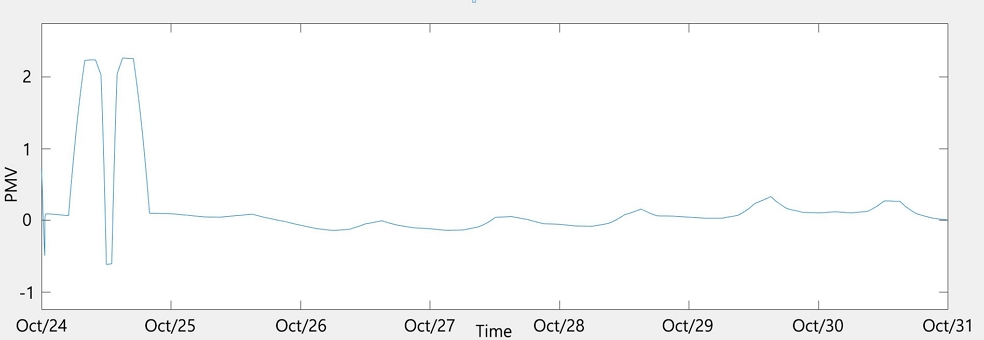
Thermal comfort level by the learning model
The advantages of the adaptive model and the learning model identified in the graph are shown in the several figures. Table 2. shows the energy consumption results after controlling the indoor temperature for one week with each control model. The average energy consumption for a week decreased by about 12% for the adaptive model and about 22% for the learning model compared to the thermostat, respectively. Compared to the amount of energy consumed for continuous operation, it can be seen that the amount of energy saved by reducing overshooting at the beginning of the system operation and mitigating signal fluctuation at the middle of the system operation. As shown in Table 3., it can be seen that the homeostasis of maintaining the thermal comfort calculated by CvRMSE shows very high effectiveness compared to the thermostat control. Therefore, a great advantage of the learning model is confirmed, which reduces unnecessary energy consumption through adaptive control and learns it by an artificial neural network algorithm to calculate the result value with an effective regression model when similar outdoor air and operational conditions are input.
Comparison of the thermal loads
Comparison of the thermal comfort
5. Conclusion
This research investigated the critical role of supply air control strategies in simultaneously mitigating environmental challenges and sustaining acceptable indoor thermal comfort within the service areas of a sports facility. The primary objective was to develop and evaluate control methodologies that strategically balance energy efficiency and thermal comfort while maximizing the utilization of existing structures to minimize new construction.
The key contributions are derived from the performance evaluation of the proposed adaptive and learning control models compared to a conventional thermostat strategy. The proposed control models demonstrated significant energy savings over a week-long simulation period. The adaptive model achieved approximately a 12% decrease in average energy consumption, while the learning model (utilizing an artificial neural network algorithm) showed a more substantial reduction of about 22% compared to the thermostat. This saving is attributed to the models' ability to reduce overshooting during system startup and mitigate signal fluctuation during continuous operation. The control effectiveness in maintaining thermal comfort homeostasis was confirmed, which indicated a very high level of effectiveness for the proposed models compared to the thermostat control. As a result, the learning model confirmed a great advantage by reducing unnecessary energy consumption through adaptive control and then using an artificial neural network algorithm to learn and produce effective regression results when similar outdoor air and operational conditions were input.
Future research should focus on expanding the dataset to enhance the statistical robustness and overall reliability of these findings including investigation into the integration of these adaptive and learning models and network typologies.
References
-
L. Perez-Lombard, J. Ortiz, I. Maestre, The map of energy flow in HVAC systems, Applied Energy, 88(12), 2011, pp.5020-5031.
[https://doi.org/10.1016/j.apenergy.2011.07.003]

-
A. Kusiak, M. Li, F. Tang, Modeling and optimization of HVAC energy consumption, Applied Energy, 87(10), 2010, pp.3092-3102.
[https://doi.org/10.1016/j.apenergy.2010.04.008]
-
J. Ahn, S. Cho, D. Chung, Analysis of energy and control efficiencies of fuzzy logic and artificial neural network technologies in the heating energy supply system responding to the changes of user demands, Applied Energy, 190, 2017, pp.222-231.
[https://doi.org/10.1016/j.apenergy.2016.12.155]
-
B. Paris et al., Hybrid PID-fuzzy control scheme for managing energy resources in buildings, Applied Soft Computing, 11(8), 2011, pp.315-319.
[https://doi.org/10.1016/j.asoc.2011.05.052]
-
E. Barbadilla-Martun et al., Analysing the indoor temperature ranges for an efficient control of HVAC systems, Energy and Buildings, 301, 2023, 113681.
[https://doi.org/10.1016/j.enbuild.2023.113681]
-
J. Ahn, Adaptive and predictive control method to improve energy efficiency and indoor thermal comfort for intermittently occupied spaces, KIEAE Journal, 25(5), 2025, pp.21-29.
[https://doi.org/10.12813/kieae.2025.25.5.021]
-
G. Huang et al., State of the art review on the HVAC occupant-centric control in different commercial buildings, Journal of Building Engineering, 96, 2024, 110445.
[https://doi.org/10.1016/j.jobe.2024.110445]
-
F. Langner et al., Experimental evaluation of model predictive control and fuzzy logic control for demand response in buildings, Applied Energy, 401(A), 2025, 126666.
[https://doi.org/10.1016/j.apenergy.2025.126666]
-
R. Qi et al., Adaptive control: A tutorial, Fuzzy System Identification and Adaptive Control, 1, 2019, pp.55-74.
[https://doi.org/10.1007/978-3-030-19882-4_3]
-
J. Moon, J. Ahn, Improving sustainability of ever-changing building spaces affected by users’ fickle taste: A focus on human comfort and energy use, Energy and Buildings, 208, 2020, 109662.
[https://doi.org/10.1016/j.enbuild.2019.109662]
-
J. Hernandez et al., A fuzzy-based building energy management system for energy efficiency, Buildings, 8(2), 2018, 14.
[https://doi.org/10.3390/buildings8020014]
-
H. Yan et al., Further development of a thermal comfort based fuzzy logic controller for a direct expansion air conditioning system, Applied Energy, 219, 2018, pp.312-324.
[https://doi.org/10.1016/j.apenergy.2018.03.045]
-
M. Abuhussain et al., Adaptive HVAC System based on fuzzy controller approach, Applied Sciences, 13, 2023, 11354.
[https://doi.org/10.3390/app132011354]
-
B. Grillone et al., A data-driven methodology for enhanced measurement and verification of energy efficiency savings in commercial buildings. Applied Energy, 301, 2021, 117502.
[https://doi.org/10.1016/j.apenergy.2021.117502]
-
S. Zhou et al., A comprehensive review of the applications of machine learning for HVAC, Decarbon, 2, 2023, 100023.
[https://doi.org/10.1016/j.decarb.2023.100023]
-
J. Ahn, D. Chung, S. Cho, Performance analysis of space heating smart control models for energy and control effectiveness in five different climate zones, Building and Environment, 115, 2017, pp.316-331.
[https://doi.org/10.1016/j.buildenv.2017.01.028]
-
X. Liu, Z. Gou, Occupant-centric HVAC and window control: A reinforcement learning model for enhancing indoor thermal comfort and energy efficiency, Building and Environment, 250, 2024, 111197.
[https://doi.org/10.1016/j.buildenv.2024.111197]
-
A. Borodinecs et al., Assessment of HVAC performance and savings in office buildings using data-driven method, Clean Technology, 6(2), 2024, pp.802-813.
[https://doi.org/10.3390/cleantechnol6020041]
-
Q. Yin et al., A review of research on building energy consumption prediction models based on artificial neural networks, Sustainability, 16(17), 2024, 7805.
[https://doi.org/10.3390/su16177805]
-
G. Gokhale, B. Claessens, C. Develder, Physics informed neural networks for control oriented thermal modeling of buildings, Applied Energy, 314, 2022, 118852.
[https://doi.org/10.1016/j.apenergy.2022.118852]
-
J. Ahn, S. Cho, Anti-logic or common sense that can hinder machine’s energy performance: Energy and comfort control models based on artificial intelligence responding to abnormal indoor environments, Applied Energy, 204, 2017, pp.117-130.
[https://doi.org/10.1016/j.apenergy.2017.06.079]
-
J. Ahn, A learning predictive model for improving the performance of indoor thermal controls and energy use for temporary buildings, KIEAE Journal, 25(5), 2025, pp.67-74.
[https://doi.org/10.12813/kieae.2025.25.5.067]
-
L. Di Natale et al., Physically consistent neural networks for building thermalmodeling: Theory and analysis, Applied Energy, 325, 2022, 119806.
[https://doi.org/10.1016/j.apenergy.2022.119806]
-
P. Pandey, B. Dong, Prediction of window opening behavior and its impact on HVAC energy consumption at a residential dormitory using Deep Neural Network, Energy and Buildings, 296, 2023, 113355.
[https://doi.org/10.1016/j.enbuild.2023.113355]
-
X. Du et al., Comparison of light-thermal environment and energy consumption in ice sports venues between China and Finland, Energy and Buildings, 349, 2025, 116523.
[https://doi.org/10.1016/j.enbuild.2025.116523]
-
E. Trianti-Stourna et al., Energy conservation strategies for sports centers: Part A. Sports halls, Energy and Buildings, 27(2), 1998, pp.109-122.
[https://doi.org/10.1016/S0378-7788(97)00040-6]
-
S. P. Rajagopalan, M. Luther, Thermal and ventilation performance of a naturally ventilated sports hall within an aquatic centre, Energy and Buildings, 58, 2013, pp.111-122.
[https://doi.org/10.1016/j.enbuild.2012.11.022]
-
O. Smedegard et al., On the model complexity of the air handling unit to investigate the energy efficiency of indoor swimming pool facilities, Energy and Buildings, 293, 2023, 113197.
[https://doi.org/10.1016/j.enbuild.2023.113197]
-
J. Li et al., A case study of operating strategy analysis of heating and cooling source units for a large sports center, Buildings, 15(23), 2025, 4301.
[https://doi.org/10.3390/buildings15234301]
- J. Ahn, Development of energy performance metrics for airport terminal buildings using multivariate regression modeling (Doctoral dissertation), USA: North Carolina State University, 2016.
-
J. Ahn, S. Cho, D. Chung, Development of a statistical analysis model to benchmark the energy use intensity of subway stations, Applied Energy, 179, 2016, pp.488-496.
[https://doi.org/10.1016/j.apenergy.2016.06.065]
- University of Oxford, Basics of Thermodynamics, https://www.physics.ox.ac.uk, , 2025.10.13.
-
T. Cheung et al., Analysis of the accuracy on PMV - PPD model using the ASHRAE Global Thermal Comfort Database II, Building and Environment, 153, 2019, pp.205-217.
[https://doi.org/10.1016/j.buildenv.2019.01.055]
-
J. Grabe, Potential of artificial neural networks to predict thermal sensation votes, Applied Energy, 161, 2016, pp.412-424.
[https://doi.org/10.1016/j.apenergy.2015.10.061]
- K. Priddy, P. Keller, Artificial neural networks: An introduction, Bellingham, Washington: SPIE Press.
-
H. Maier et al., Exploding the myths: An introduction to artificial neural networks for prediction and forecasting, Environmental Modeling & Software, 167, 2023, 105776.
[https://doi.org/10.1016/j.envsoft.2023.105776]